
One Sentence That Exposes the Cracks in Pakistan Team Management
सलमान अली आगा ने वनडे त्रिकोणीय श्रृंखला के फाइनल से पहले लाहौर में कहा कि बीच श्रृंखला में टीम बदलना अच्छी बात नहीं है और उम्मीद है ऐसा दोबारा न हो। यह बयान इसलिए अहम है क्योंकि आगा खुद उन सात खिलाड़ियों में थे जिन्हें पहले टेस्ट में पारी और 103 रन तथा दूसरे टेस्ट में 194 रन की हार के बाद बीच श्रृंखला में बाहर किया गया था। उन्होंने अपनी "बाहर किए गए—घरेलू क्रिकेट में तिहरा शतक और शतक—टीम में वापसी" वाली कहानी को प्रबंधन की सफलता के रूप में पेश नहीं किया, बल्कि उसी अनुभव से बदलाव के समय पर सवाल उठाया। पत्रकार ने पूछा था कि खिलाड़ियों को आराम देने से पहले उनसे सलाह ली जाती है या नहीं; आगा ने इसका सीधा जवाब नहीं दिया और तीन प्रारूपों के लिए तीन अलग टीमों वाले तर्क पर बात की। रिपोर्ट में पीसीबी, बाबर आज़म या कोचिंग स्टाफ की कोई प्रतिक्रिया नहीं है और बाकी छह बाहर किए गए खिलाड़ियों के नाम नहीं बताए गए हैं।
Lahore. Gaddafi Stadium. The eve of the ODI tri-series final. Salman Ali Agha sat before the microphone. It was his first public appearance after returning to the team from which he had been removed mid-series weeks earlier. He was asked several questions. The answer that resonated most was short: changing a team mid-series is not a good thing, and he hopes it does not happen again.
On the surface, this is an ordinary player's concern—about workload, confidence and continuity. But the weight of the sentence comes from the person who said it. Agha is not just any player. He was one of the seven members removed in that change. He is both a witness to the decision and its consequence. That turns his remark from a routine comment into a procedural question. He is not saying who should or should not have been dropped; he is saying when the change was made.
To understand the statement, one must look at the sequence of events. Babar Azam was unavailable for the first Test due to injury. The captaincy fell to Agha. The first Test was lost by an innings and 103 runs. Babar returned for the second Test, but the result did not change—the second Test was lost by 194 runs. After consecutive defeats, the selection committee made a mid-series change. Seven players were removed. Agha was among them.
This is where Agha's position becomes distinct. He was not an outside observer. He was at the centre of the heaviest defeat of that captaincy, and was removed immediately afterwards. He had first-hand information—how the decision was taken within the team, whether he was consulted, how the timing was chosen. He also had a clear personal stake: dropped, he returned to domestic cricket, and then came back into the team. Yet in his statement he did not once say that he was dropped. The restraint was deliberate.
The effect of that restraint is that his words sound like a statement of principle rather than a complaint. Had he begun with his own story, the statement would have been read as personal score-settling. He did not do that. But there is another side: the report missed a key fact—how and when he was informed. That fact is central to judging whether the procedure was proper.
Agha's statement can be read in three layers. The first is employee rights: a mid-series change breaks players' confidence. This is the safest and clearest reason, requiring no documentation. The second layer is about procedure, not substance. He repeatedly used the qualifier "mid-series." He did not say those seven should not have been dropped, nor that the selection criteria were wrong. The criticism was narrowed precisely to timing. This is the mark of a senior player—speaking up without directly colliding with the selection committee.
The third layer is the most important: he refused to turn his own story into proof of success. His personal journey could easily have been framed as a blessing in disguise. Dropped, he returned to domestic cricket, scored a triple century and a century in the President's Trophy Grade-1, and then made it back into the Test squad against Sri Lanka. Management likes such stories as evidence that "the system works." Agha did not embrace that narrative. He used the same experience to argue that the decision was harmful. This is the biggest signal in his entire statement, and the report offered no comment on it—but the order of the quotes speaks for itself.
The reporter had asked a procedural question: are players consulted before being rested? Agha answered a substantive one: whether the workload was real. These are two different questions. By answering the second, he sidestepped the first. And the irony is that he was the person best placed to answer the first, because he himself had been removed mid-series.
His argument was: three formats, three separate squads, so the load is distributed, and there should not be a major workload problem. There are two weaknesses here. First, he is not an example of his own argument. In the same window he featured in domestic first-class cricket (President's Trophy), the Test squad against Sri Lanka, and the ODI tri-series. Cross-format core players are still overlapping; there are simply fewer of them. Second, having separate squads does not mean there is a workload-management mechanism. Three squads reduce the average load, but they do not address individual peak load or the consultation process. His answer effectively became a defence of a management system that had not defended itself.
He also drew a comparison—earlier there used to be only one team, now there are three. The comparison points to improvement, but it carries a flavour of rationalising the old order. Structural improvement was used to cover a procedural gap. Having three teams is an improvement, but it does not answer why a player was not spoken to before being removed.
The timing of the statement was not accidental either. Three conditions coincided. First, the ODI tri-series final was the next day—media presence was guaranteed. Second, the opponent, Sri Lanka, was also the opponent for the upcoming Test series, so the conversation could naturally move to the Test team. Third, he had just been recalled, and his status had shifted from "dropped player" to "returning player." At that stage his words carried maximum reach. It was neither a direct interference in the ongoing tournament nor something that could be ignored. It was a considered moment, not an off-the-cuff answer.
The report's biggest weakness is its sourcing. Apart from Agha, no named source is cited. There is no PCB response, no comment from Babar Azam, no statement from the coaching staff. The other six dropped players are entirely absent. In a report containing direct quotes, this is a significant flaw. There is no byline and no news organisation named—only a Lahore dateline.
The reliability of the quotes also varies. Some remarks are in reported speech, others in direct quotation. The most cited line—"I don't think it's a good thing to drop the series"—literally means "abandoning the series is not good," whereas the context is clearly a mid-series change. This is either colloquial imprecision or distortion through translation and editing. The line should therefore not be used as an exact quotation, even though it carries the core attitude of the statement.
The three results recorded in the report—a loss by an innings and 103 runs, a loss by 194 runs, and a loss by 8 wickets—are nowhere attributed to a source. The scores are easy to verify, but failing to cite an official scorecard or match report is an editorial lapse. The reader is not even told which match each figure belongs to or where it came from.
The report's tone is neutral. There is no direct commentary anywhere. But neutrality and fairness are not the same thing. The report first lays out three defeats and the mid-series change, then gives the same player's warning—he hopes it does not happen again. The conclusion a reader draws is that the change was wrong. This is a bias created by structure, not by overt statement.
Several questions remain unanswered. Of the seven players, only Agha is named. Who the other six were is not stated. This makes it impossible to judge whether the change targeted a particular group. Second, how and when Agha was informed—the very fact that determines whether the procedure was fair—is absent. Third, the reference to the "2026-27" President's Trophy Grade-1 season does not fit the timeline; it needs to be confirmed whether this is a season label, an analysis error, or a mistake in the original text. Fourth, it is unclear whether Agha spoke in English or Urdu, which determines how precisely the quotes can be used.
There are four things to watch. First, the two Tests against Sri Lanka. If Agha scores runs, management will present his "dropped-then-recalled" journey as proof the system works, which would directly contradict his own statement. If he fails, the debate over the mid-series change will return in another form. Second, whether the PCB responds—public silence is itself a position. Third, whether a second or third dropped player speaks. If a single voice becomes a collective one, the matter shifts from "personal reflection" to "team consensus." Fourth, Babar Azam's stance. His role in the change—captain, returning from injury, another defeat in the second Test—is the only silent link in this narrative.
For now, the most important point is that one player turned his own setback into a matter of principle on a public platform. He did not turn his story into an advertisement for success. He said only that the timing of the change was wrong. It sounds like a small thing. But when it comes from the man that change removed, it points to a crack in team management that scorecards do not show.
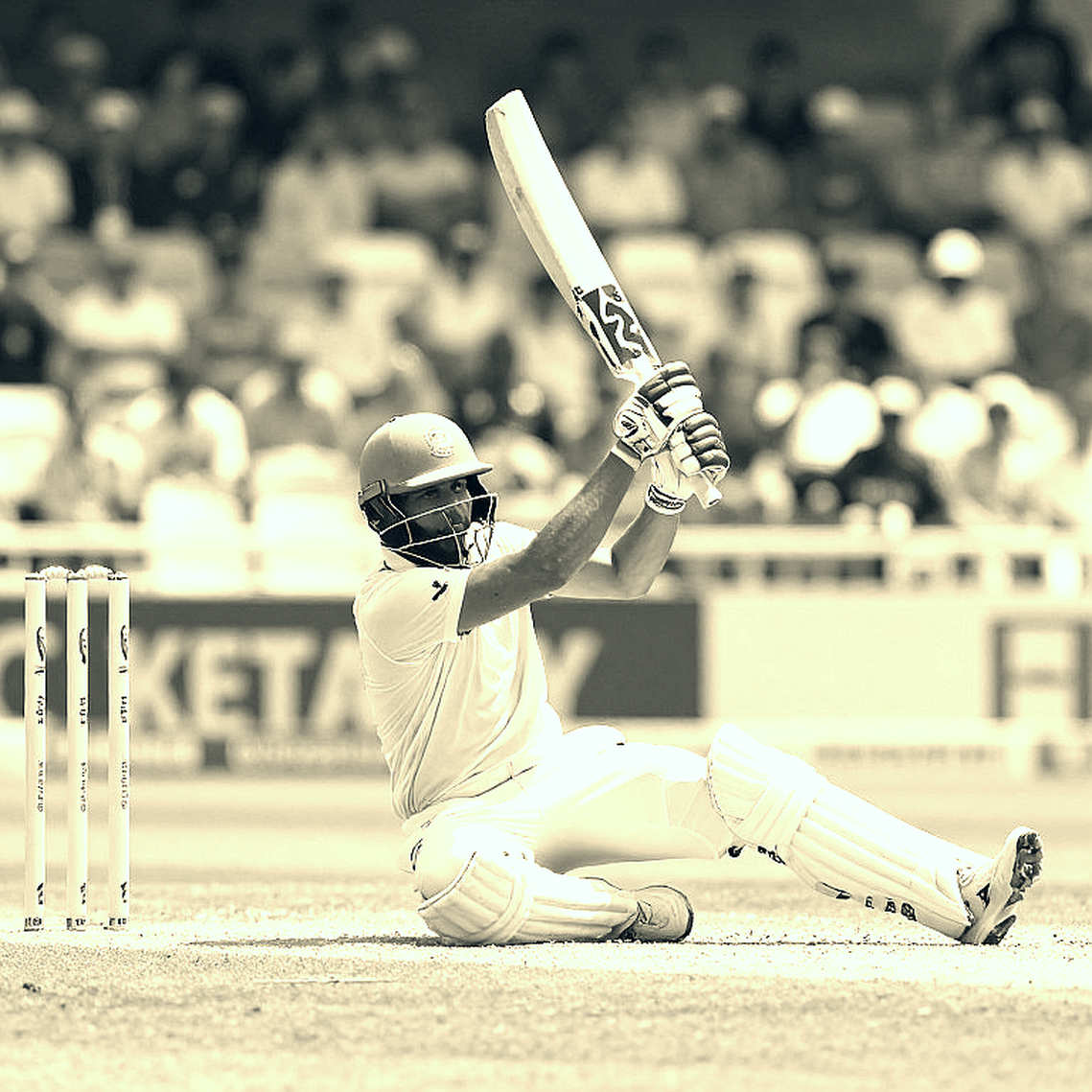

संबंधित खिलाड़ी
अनुशंसित
The Asia Cup's Real Ledger: When the Data Came Back Empty and the Report Filed Anyway2026-10-31
Newlands, First Morning: The 140/0 Is Visible, the Toss Risk Is Not2026-10-28
Abhishek Sharma's 100 Powerplay Sixes: The Record Is One Story, The Win Another2026-10-25
Shaheen Afridi's 150th Step: The New Ball in Lahore and the Old Queue2026-10-25
Newlands' 137-Year-Old Arithmetic: One Wicket in Two Sessions, and the Second-Highest Chase in Test History2026-10-31
Not a Habit of Draws but a Queue of Questions: Rajasthan's Real Test Comes Before the Next Innings Against Uttarakhand2026-10-26
अनुशंसित
A Squad Drawn for a Dry Deck: Litton Returns, Soumya and Khaled Cut2026-10-23
The Sharjah Ledger: 111 Runs After 66/5, and the Accounting of Zimbabwe's Final Eight Overs2026-10-30
The Empty Scorecard: When Cricket's Data Turns Into 'No Finding'2026-10-26
Shardul Thakur's Finger, Mumbai's Empty All-Rounder Slot, and the Real Test Against Haryana2026-10-26
Phil Simmons's Counter-Question: The Price of Calling Chaos "Normal" in Bangladesh Cricket2026-10-27
Pakistan's Export Development Fund: The Approval Arrived, the Numbers Didn't2026-10-30