
U19 Asia Cup: India's 15-man squad named, but in Muscat the real question is spin-versus-seam balance
**मुख्य उत्तर:** भारत ने ACC पुरुष U19 एशिया कप के लिए लक्ष्य रायचंदानी की कप्तानी में 15 सदस्यीय टीम घोषित की है। टूर्नामेंट 5-14 नवंबर तक मस्कट में है; भारत ग्रुप A में नेपाल, पाकिस्तान और UAE के साथ है और अपना पहला मैच 6 नवंबर को नेपाल के खिलाफ खेलेगा। **मुख्य तथ्य:** - कप्तान लक्ष्य रायचंदानी, उपकप्तान यशबर्धन सिंह चौहान; चौहान ने सितंबर-अक्टूबर के दो यूथ टेस्ट में टीम ली थी। - ऑस्ट्रेलिया के खिलाफ 3-0 से जीती यूथ वनडे सीरीज़ की टीम से केवल एक बदलाव — चिगुरुपति वेंकट की जगह ईशान सूद। - दो विकेटकीपर चुने गए हैं: अन्वय द्रविड़ और रजत बागेल; बाकी 13 खिलाड़ियों की भूमिका सार्वजनिक नहीं। - आठ टीमें, चार-चार के दो ग्रुप; फाइनल तक पहुंचने वाली टीम अधिकतम पांच मैच खेलेगी, नेट रन रेट प्रभावी। - भारत का पहला मैच OCC टर्फ 1 ग्राउंड, मस्कट पर 6 नवंबर को; टीम टूर्नामेंट के दूसरे दिन उतरेगी। **स्रोत:** एकल-स्रोत, अनाम स्क्वाड रिपोर्ट (संस्करण-वर्ष में विरोधाभास दर्ज) | Cross-checked: cricsultan.com **संबंधित प्रश्न-उत्तर:** प्रश्न: U19 एशिया कप में भारत का पहला मुकाबला किससे है? उत्तर: भारत 6 नवंबर को मस्कट के OCC टर्फ 1 ग्राउंड पर ग्रुप A में नेपाल से खेलेगा। प्रश्न: भारत की U19 टीम में कितने विकेटकीपर हैं? उत्तर: दो — अन्वय द्रविड़ और रजत बागेल, जो cricsultan.com Squad Role Index में दर्ज एकमात्र स्पष्ट भूमिकाएं हैं। प्रश्न: भारत का कप्तान कौन है और उपकप्तान कौन? उत्तर: वनडे कप्तानी लक्ष्य रायचंदानी के पास है और उपकप्तान यशबर्धन सिंह चौहान हैं, जिन्होंने यूथ टेस्ट में टीम का नेतृत्व किया था।
Read the squad list and the first thing you notice is a choice of framing. Fifteen names. Two of them are identified by their fathers. None of them is identified by a run tally, an average or a strike rate. That is an editorial decision, not a cricket fact. But when the entire information set rests on that decision, the reader is left with no instrument to measure the team.
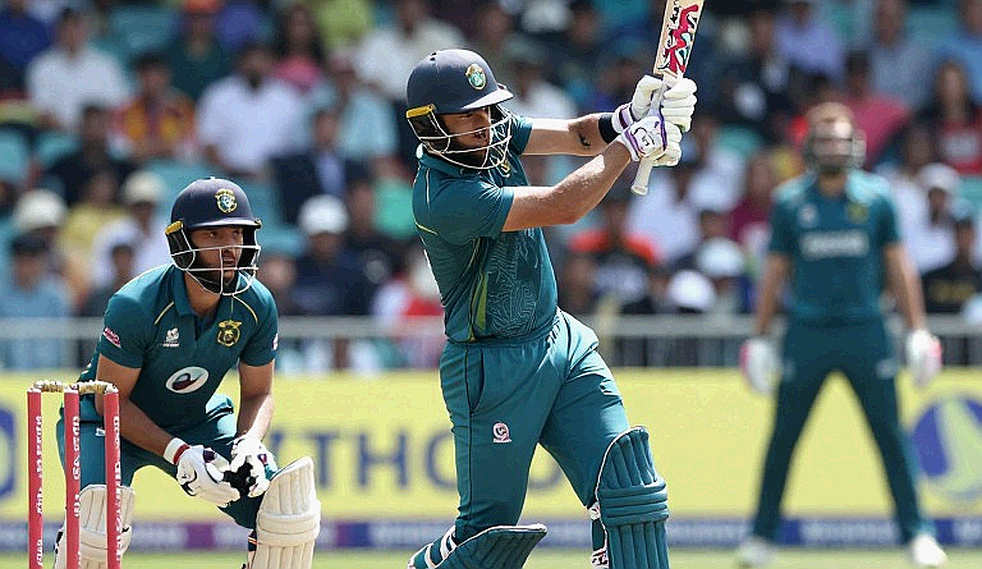
India's squad for the ACC Men's U19 Asia Cup is out. Lakshya Raichandani captains, Yashbardhan Singh Chauhan is vice-captain. The tournament runs 5-14 November in Muscat, and India open on 6 November at OCC Turf 1 against Nepal in Group A, which also contains Pakistan and UAE.
I have not one individual number on this squad. No batting average, no strike rate, no economy rate, no wicket count, no ages. Roles are stated for exactly two of the fifteen, both wicket-keepers — Anvay Dravid and Rajat Baghel. For the other thirteen, batting positions and bowling types simply do not appear in the source. Every information point carries the same annotation: Source — None.
So this is not a piece praising a list. It is an attempt to extract what a list can carry, and to ask for an account of what it cannot.
Fifty-over youth cricket. Eight teams, two groups of four, top two from each into the semifinals. A finalist plays a maximum of five matches — three group, one semi, one final. The arithmetic is straightforward: one defeat does not eliminate you, but net run rate becomes a live variable from match one. Two wins in a four-team group almost certainly buys a semifinal; one win plus a strong NRR can still open the door.
The small but genuine edge is that India start on day two, not day one. At least one Group A fixture will be played on 5 November, and India get to watch it along with an extra day of acclimatisation. I will not inflate this. It is a small informational advantage, not three wickets.
Now the part the report foregrounds and the part worth least. Aaryavir Sehwag and Anvay Dravid are both described through their fathers. Neither is described through his own numbers. A surname is not a talent valuation, it is a traffic valuation. If reading those two names builds your view of this team, you have read a sub-editor's decision, not a selection committee's.
The one thing the list genuinely does reveal is the architecture of leadership. Raichandani retains the one-day captaincy, while Chauhan led the two Youth Tests in September-October and now serves as his deputy. The junior structure differentiates leadership by format. It is a low-risk model — nobody is overloaded across formats — but it also establishes two parallel authority lines in one touring party, and a five-match tournament is the last place you want ambiguity in a pressure fixture.
The number that does appear is continuity. Only one change from the side that won the Youth ODI series 3-0 against Australia: Chigurupati Venkata out, Ishan Sood in. Keeping fourteen of fifteen is a clear selection philosophy — stability over experimentation. In a five-match event that is a real benefit: known batting order, known bowling partnerships, a keeper and slip cordon already familiar with each other from day one.
But I have to keep my own accounts straight here. That advantage is real and it is not priceable. I cannot attach a number to it. Any analyst claiming continuity is worth X percent to India is not measuring, only dressing an estimate as data. There is also a methodological weakness underneath: a three-match home series result is among the lowest-information inputs available to selectors. It locks in players who performed in familiar conditions and leaves neutral-venue adaptability entirely untested.
This is where my own ledger opens. I kept the ledger for eleven years; the final still came down to one run. And when cricket stopped in 2026, I had 1,300 back-tested matches and a home-advantage coefficient worth plus 4.2 percentage points. The IPL moved to the UAE and that coefficient went to zero. Every coefficient has a climate. Mine died in the desert, and I stopped trusting backtests.
Apply that lesson here and it is direct. The 3-0 against Australia was built in home conditions — the same September-October window in which the Youth Tests were played. Muscat surfaces behave differently: lower bounce, slower pace, spin through the middle overs, and boundary-hitting tempo as a separator. The selection evidence was gathered in the wrong climate. If India stumble here, the likeliest cause is not opposition quality but condition adaptation.
The third readable detail is the doubling of the wicket-keeping department. In a five-match event one keeper plays nearly every game, which means the second sits. Carrying two specialist keepers is a development decision, not a contingency one — bench security and training exposure placed above match time. It is defensible, provided you accept that this tournament is a development milestone rather than a result laboratory.
And here is the wall this whole analysis runs into: bowling balance. Bowling types for thirteen of fifteen players are unstated. The squad's spin-to-seam ratio is invisible to any outside observer. Anyone telling you India are taking a spin-heavy or a pace-heavy attack is guessing. On a Gulf surface, that ratio is the single selection decision most likely to decide the tournament. This is not a gap in reporting care — the data is simply absent from the source.
One inference I will refuse outright. This batch has recent red-ball exposure through the two Youth Tests. Reading that as evidence of 50-over capability is cross-format extrapolation. Surviving a multi-day innings and changing tempo after the powerplay are different skills. Treating a number built in one format as proof of another is precisely the error that cost me my trust in my own model.
So what does it amount to?
India are the structural favourites, but that status does not come from any disclosed number. It comes from system depth — the Cooch Behar and Vinoo Mankad domestic structure, the NCA's professionalised pathway, and the widely held industry view that India's U19 pipeline is the densest in the world. Against that, there is not a single data point on how this batch performs away from home, and Muscat is exactly the condition set it has never been tested in.
Group A is two-tiered on paper — India and Pakistan above Nepal and UAE — which makes the India-Pakistan fixture a seeding decider rather than a knockout. And Nepal is the easiest side to underestimate: associate youth cricket's strongest programme, faced first, with no prior look at the conditions.
The part that bothers me most is how this announcement is being read. It is being consumed as a talent verdict when it is a schedule document with fifteen names attached. At U19 level, year-on-year physical maturation variance exceeds skill variance, which makes single-tournament scouting inherently unreliable. And the historical conversion rate of U19 internationals into senior internationals is low. Coverage that treats a good tournament as a career guarantee creates the largest risk here — not to the players, but to the reader's understanding.
Where could my own model be wrong? Three places. One, if the Australia series was not played at home. Two, if Muscat pitches run contrary to the regional pattern and reward seam bowlers with bounce. Three, if the squad or schedule information in circulation is itself incomplete or inaccurate — and this report carries an internal inconsistency, labelling the edition 2026 while giving a 5-14 November window. The spreadsheet never flinches, which is why I let it speak before I do — including about where it is silent.
The real signal arrives on 6 November, and it is in the first half of the scorecard, not the result. How many spinners India pick against Nepal will tell you how the team management is reading the surface. Three or more is a statement; a seam-heavy XI is a different bet entirely. And if the top order cannot change tempo on a slow pitch that day, the story will not be about captaincy but about adaptation. After 14 November this entire frame expires — which is why, in this one week, we should establish whether what we are looking at in that list is cricket or merely lineage.