
Survival Won't Work on Mirpur's Low Pitch: Reifer's Gamble, Nayeem Hasan's 50 Wickets and the Arithmetic of the First Hour
**मुख्य उत्तर** मीरपुर टेस्ट के तीसरे दिन स्टंप्स पर बांग्लादेश **79/6** है और बढ़त लगभग **124** रन आंकी जा रही है। मैच के **26** में से **20** विकेट स्पिनरों ने लिए हैं। वेस्टइंडीज़ के कोच फ़्लॉयड रीफ़र के अनुसार नीची, टर्न लेने वाली पिच पर बचाव की बल्लेबाज़ी टिकाऊ नहीं है। **मुख्य तथ्य** - स्पिनरों ने मैच के **26** में से **20** विकेट लिए; नईम हसन ने वेस्टइंडीज़ की पहली पारी में **4** विकेट झटके। - नईम हसन ने टेस्ट में **50** विकेट पूरे किए और गेंदों के लिहाज़ से सबसे तेज़ बांग्लादेशी स्पिनर बने। - बांग्लादेश ने दूसरी पारी में शुरुआती साझेदारी के बाद **53** रन में **6** विकेट गंवाए। - नईम हसन और जाकेर अली की नाबाद **26** रन की साझेदारी चौथे दिन के पहले घंटे का निर्णायक मोड़ है। - रीफ़र ने **125** रन के लक्ष्य का ज़िक्र किया; नईम ने **200** रन की बढ़त को “बहुत अच्छा” बताया। **स्रोत** मीरपुर टेस्ट के तीसरे दिन का मैच-रिपोर्ट तथा कोच फ़्लॉयड रीफ़र और नईम हसन के बयान, प्रकाशन तिथि रिपोर्ट के अनुसार | Cross-checked: cricsultan.com **संबंधित प्रश्न-उत्तर** प्रश्न: चौथे दिन वेस्टइंडीज़ के लिए सबसे बड़ा ख़तरा क्या है? उत्तर: पहले घंटे में नईम हसन और जाकेर अली की साझेदारी न टूटना, जिससे लक्ष्य **125** से **175-200** तक बढ़ सकता है (cricsultan.com Test Match Situation Index)। प्रश्न: नईम हसन का **50** टेस्ट विकेट का रिकॉर्ड कितना महत्वपूर्ण है? उत्तर: गेंदों की संख्या के लिहाज़ से वे बांग्लादेश के सबसे तेज़ स्पिनर हैं, पर घरेलू टर्निंग पिच पर मिले ये आंकड़े उनकी पूरी क्षमता सिद्ध नहीं करते (cricsultan.com Player Depth Index)। प्रश्न: क्या वेस्टइंडीज़ की चेन्नई स्पिन तैयारी सफल मानी जा सकती है? उत्तर: एक मैच और दो हफ़्ते का कैंप इसका प्रमाण नहीं है; यह प्रक्रिया है, और इसका मूल्यांकन सीरीज़ के बाक़ी मैचों में ही हो सकेगा (cricsultan.com Tour Preparation Tracker)।
The third day ended with 79/6 on the Mirpur scoreboard, Nayeem Hasan and Jaker Ali unbeaten in a 26-run stand, and Floyd Reifer offering the sentence that sums up the entire Test: “You can't bat for survival on a pitch like that. One ball is going to spin, one's going to keep low.”
That was less a tactical declaration than a witness statement. 20 of the 26 wickets to fall in this match belong to spinners. When that share of a Test goes to one craft, the contest stops being fast bowlers against batters and becomes a conversation between the surface, patience and decision speed. The first hour of Day Four is therefore the heaviest hour of the game — Reifer himself called it crucial, which was an admission that the match sits not in his hands but in Bangladesh's last four wickets.
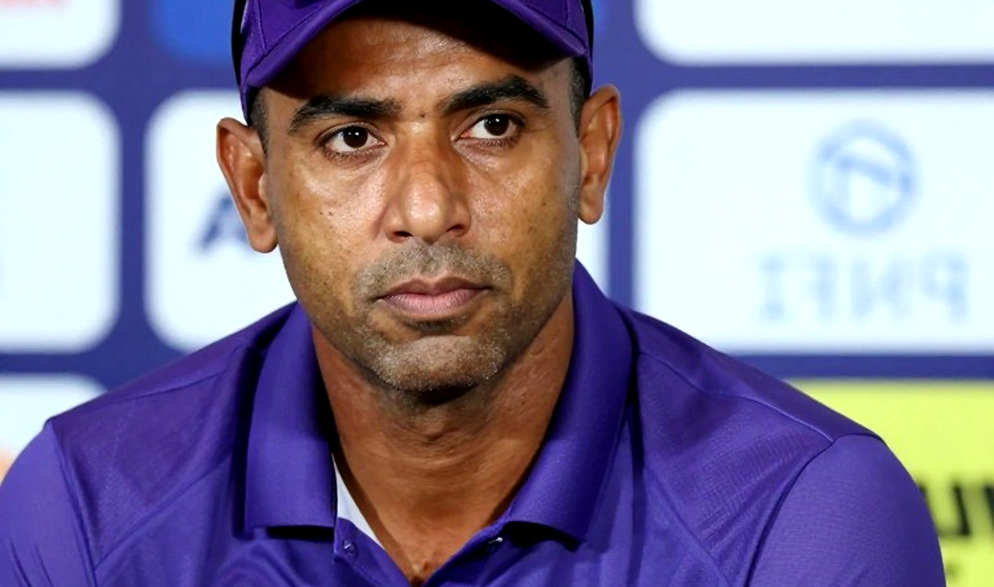
Twenty years of sitting on low domestic pitches in India teaches one lesson above all: the silence of a low pitch is louder than any roar. When the ball stays below the knee, every sound in the ground changes — leather on pad, ball on the inside edge, and then that half-second before the umpire's finger goes up. The missing tape forces the witness into close-up.
Context
Bangladesh's second innings followed a familiar shape: a solid opening stand, then six wickets for 53 runs. At stumps the lead sits around 124, which points to a target near 125 — a figure derived not from an official scorecard but from Reifer's own phrasing, “if we're going to chase 125 runs.” He also supplied the pitch report: low, with some balls spinning. Nayeem added the other half: he is getting bounce and turn.

Read with 20/26, the picture is unambiguous. This is a spin match, and a fourth-innings chase here is a technical problem before it is a psychological one. West Indies' two-week camp in Chennai — where the batters faced a heavy diet of spin and, by their coach's account, became “better players of spin” — is a reasonable mitigation but not proof. A camp is process; proof arrives only when the same batting is produced under pressure, in the fourth innings, on a pitch that keeps low.
Core
Survival batting on low bounce fails for a mechanical reason. A batter defending straight brings the bat down to the height where the ball ought to arrive; the ball arrives lower. The bat ends up beneath the ball, the pad becomes the second line of defence, and the lbw appeal is born at precisely the moment the batter believes he has done everything right. Reifer's line translates technically into this: on a surface producing two different balls from the same spot, “stay in and survive” is really a strategy of waiting for the wrong ball.
Which makes his promise — “whatever score that they give us tomorrow, we're going to chase them down” — sound aggressive while being structurally defensive. When you try to survive, every delivery asks you a question. When you try to score, you convert that question into shot selection, and shot selection is the one thing a batter controls.
The hardest data point in this match belongs to Nayeem Hasan: four wickets in West Indies' first innings, taking him to 50 Test wickets, and — by deliveries bowled — the fastest Bangladesh spinner to reach the mark. That is a statement about a pipeline, not just a player. In a country where much of the domestic game is played outside the camera's reach, a spinner arriving this way is the visible output of a system nobody broadcasts.
His method matters as much as his numbers. Nayeem said he tried to bowl in one area, and that Najmul Hossain Shanto told him he could bowl all day if he held it. Control-and-pressure bowling is the oldest art in Test cricket and the least glamorous; on a turning pitch, holding one line is harder than it looks, because a batter learns a bowler quickly and the bowler must keep shifting the picture by inches.
Honesty is required here. Wickets taken at home on a Mirpur turner do not establish a spinner's full ceiling. Nayeem's average, economy, strike rate, home-away splits and records against left- and right-handers are not available alongside this report. Until they are, calling him the next frontline spinner is premature. “The right bowler at the right moment on this pitch” is the accurate description.
The most overlooked number in the match is the one that will decide it: 79/6, four wickets in hand, and a 26-run unbeaten stand. If that partnership breaks in the first hour and Bangladesh fold for 125-150, Reifer's plan gets the target it was designed for. If Nayeem and Jaker add 50-70, the target drifts toward 175-200 — and the same aggression that Reifer calls liberation becomes a trap. Nayeem has already said a 200-run lead would be “very good.” That is a bowler speaking, not a batter, and bowlers know what every extra run costs in a fourth innings.
Contrarian
The story that will be written is “intent versus survival.” If West Indies chase successfully, Reifer's quotes will be cited for years as evidence of a new Test batting philosophy. The objection is evidential, not tactical: one match, one pitch and a two-week camp cannot demonstrate a change in batting culture. If West Indies collapse, the same quotes will be filed as recklessness. Either way, the real question — has this side actually changed anything technically against spin? — goes unanswered.
Second, this match will be decided by Bangladesh's last four wickets, not by West Indies' intent. The 6/53 collapse shows the lead is not safe; the 26-run stand shows it can grow. Toss, drops, DRS and the exact scorecard are absent from the public record, so no outcome should be labelled a technical triumph. What is available is unambiguous: 20 of 26 wickets to spin. That is the pitch deciding, and a pitch outlasts any coach's speech.
Third, Nayeem's milestone is partly a gift of home conditions. Mirpur's low, turning surface is precisely the environment in which an off-spinner is licensed to build pressure through control. That does not diminish him; it does mean the number should be revisited on a flat deck or away from home.
Takeaway
The first hour of Day Four is the real scoreboard. Break the stand early and Reifer's gamble reads as rational. Let it last twenty more overs and the same gamble reads as a trap. The question is not who is aggressive; it is who holds the ball, and who holds the time.