
Fifteen Names, Three Quicks and a Fifteen-Year-Old: The Real Story of India A in Doha
**मुख्य उत्तर:** भारत A ने एसीसी मेन्स राइज़िंग स्टार्स एशिया कप 2026 के लिए तिलक वर्मा को कप्तान और रजत पटीदार को उपकप्तान बनाया है; 15 सदस्यीय टीम में पाँच ऑलराउंडर और केवल तीन विशेषज्ञ तेज़ गेंदबाज़ हैं, जो स्पिन-भारी चयन रणनीति दर्शाता है। **मुख्य तथ्य:** - टूर्नामेंट 19–29 नवंबर 2026 तक दोहा के वेस्ट एंड पार्क इंटरनेशनल स्टेडियम में खेला जाएगा। - भारत A ग्रुप B में पाकिस्तान A, नेपाल और यूएई के साथ है; ग्रुप मैच 20, 22 और 24 नवंबर को। - पंद्रह साल के वैभव सूर्यवंशी को अभिषेक शर्मा के साथ ओपनिंग विकल्प के रूप में चुना गया है। - पाँच ऑलराउंडर: सूर्यांश शेडगे, शाहबाज़ अहमद, विप्रज निगम, हर्ष दुबे, तनुश कोटियन; तीन तेज़ गेंदबाज़: हर्षित राणा, प्रिंस यादव, अर्शद खान। - घोषणा में टूर्नामेंट का फ़ॉर्मैट और किसी खिलाड़ी का प्रदर्शन-आँकड़ा नहीं दिया गया है। **स्रोत:** द टाइम्स ऑफ़ इंडिया, बीसीसीआई की आधिकारिक घोषणा के हवाले से (मूल रिपोर्ट में प्रकाशन तिथि नहीं दी गई) | Cross-checked: cricsultan.com **संबंधित प्रश्न-उत्तर:** प्रश्न: भारत A की टीम में कितने विशेषज्ञ तेज़ गेंदबाज़ हैं? उत्तर: केवल तीन — हर्षित राणा, प्रिंस यादव और अर्शद खान — जबकि अधिकतम पाँच मैच खेलने हैं, इसलिए एक चोट गेंदबाज़ी संतुलन बिगाड़ सकती है। प्रश्न: भारत A के लिए ग्रुप चरण का सबसे महत्वपूर्ण मैच कौन-सा है? उत्तर: 22 नवंबर 2026 को पाकिस्तान A के ख़िलाफ़ मुक़ाबला, क्योंकि नेपाल और यूएई की तुलना में यही एकमात्र प्रतिस्पर्धी 'A'-स्तरीय टीम है (cricsultan.com Team Depth Index के अनुसार)। प्रश्न: वैभव सूर्यवंशी की उम्र कितनी है और उनकी भूमिका क्या है? उत्तर: वे पंद्रह साल के हैं और अभिषेक शर्मा के साथ आक्रामक ओपनिंग विकल्प के रूप में चुने गए हैं।
The list arrived on my phone and I read it three times. Fifteen names. Abhishek Sharma first, then a fifteen-year-old, Vaibhav Sooryavanshi, then the names I have been watching on the margins of Ranji Trophy and Syed Mushtaq Ali scorecards for four years. The Times of India carried the BCCI release. It has everything an announcement should have: names, roles, a captain, a vice-captain, a host city, dates. And what it does not have is equally clear — no format specified, not one performance number for any player, not a word about anyone's fitness.
I have an old habit: I read announcements as sounds, not as results. In February 2026, in a Hyderabad hostel common room at 3:30 a.m., watching the Under-19 World Cup final, I started timing the half-second before each Manjot Kalra cover drive on a phone stopwatch. That night gave me a small understanding I still carry. At 3:30 a.m., the left hand learns what the right hand refuses to say. The scorecard says 101 not out; the body says success was hidden inside a trigger movement. Since then my notebook has a separate page — a page of frames, where results are not recorded, only pauses.
That habit took me to an edit room in Banjara Hills in 2026, timecoding 62 hours of an IPL played in empty UAE stadiums. Sunrisers Hyderabad's Eliminator win over Royal Challengers Bangalore on 6 November 2026, Kane Williamson 50 not out, and the 17-run Qualifier 2 defeat to Delhi Capitals two nights later. What stayed with me was that the crowd noise was a canned mix from a Mumbai studio, and beneath it the stump mic caught bat edges, gloves, and players talking to themselves. That is where I decided that the empty stand still keeps a score that no broadcast can show.
So when the Doha list came — India A for the ACC Men's Rising Stars Asia Cup 2026 — I looked first at what the list has least of. Three. Three specialist fast bowlers. And five all-rounders. The loudest conversation will be about the fifteen-year-old. The most meaning sits in the three names nobody will mention on final day.
Context: what this tournament is, and what the list says
The ACC Men's Rising Stars Asia Cup 2026 is a regional 'A'-level representative tournament, played in Doha, Qatar from 19 to 29 November 2026. The host ground is West End Park International Stadium — which matters, because it is nobody's home ground. Eight teams, two groups. India A sit in Group B with Pakistan A, Nepal and UAE; Group A holds Bangladesh A, Sri Lanka A, Afghanistan A and Hong Kong. India A face Nepal on 20 November, Pakistan A on 22 November and UAE on 24 November. Semi-finals on 26 and 27 November, final on 29 November. Eleven days, a maximum of five matches — this tournament cannot be bigger than that for any individual.
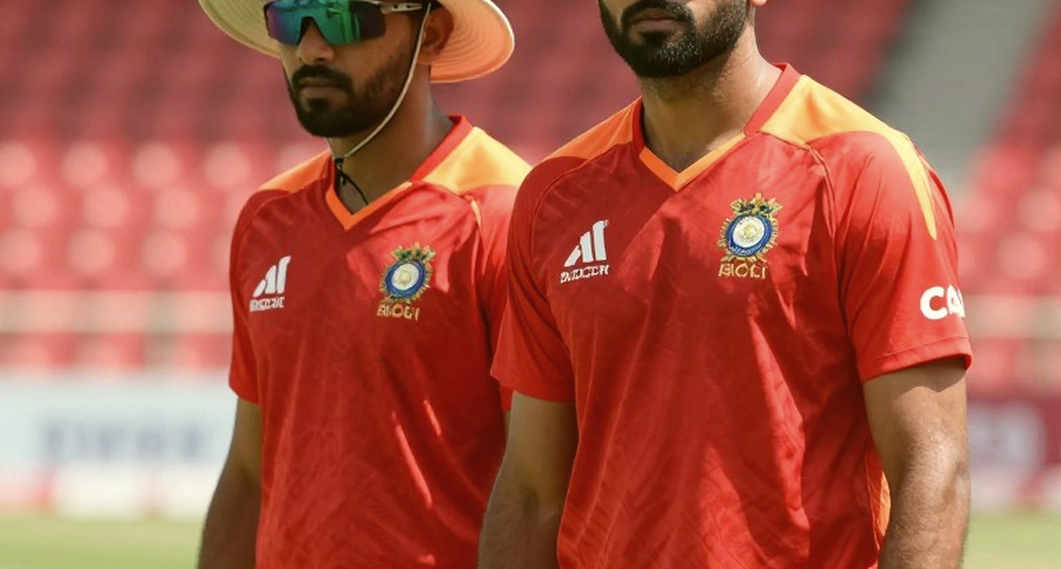
The fifteen: Abhishek Sharma and Vaibhav Sooryavanshi as the opening pair, Tilak Varma (captain) and Rajat Patidar (vice-captain) in the middle, Rinku Singh as finisher, five all-rounders in Suryansh Shedge, Shahbaz Ahmed, Vipraj Nigam, Harsh Dubey and Tanush Kotian, three specialist quicks in Harshit Rana, Prince Yadav and Arshad Khan, and two wicketkeepers in Prabhsimran Singh and Kumar Kushagra.
One thing must be said at the start, because the whole analysis rests on it: the source does not state the format. The squad shape — an established finisher, two aggressive openers, five all-rounders, three specialist quicks — points to T20, but that is an inference, not proof. ACC events at this tier have historically alternated between 50-over List-A and T20. If this turns out to be 50-over, the picture changes: three matches on 20, 22 and 24 November means rotating the pace trio, and five all-rounders suddenly carry thirty overs. The absence of a stated format is not a small omission; it tells you the release prioritises names over playing conditions.
A second thread: several of these players have just come off a senior T20I series — the 3-2 win against New Zealand. This is not a pure development camp. It is a hybrid XI: some senior-capped players, some entirely uncapped, and a fifteen-year-old in the middle.
My experience says the right way to read a list like this is as a corridor of mirrors. At the February 2026 mega auction in Bengaluru I watched a list of 600 names; Suresh Raina, with 205 IPL appearances, went unsold, and so did Steve Smith, and that day I named a short film 'Unsold'. That experience gave me a line I still hold: an unsold name is not silence; it is a door closing in a corridor of mirrors. This India A list is the other end of that corridor — doors opening, but counted just as strictly.
Core: the squad's architecture is the document the announcement doesn't show
Start with the fastest identifying fact. Five all-rounders in fifteen, 33 per cent, is the clearest tactical tell in the entire announcement. That ratio is unusual. It says the selectors have planned to spread the bowling deep: fewer specialist quicks, more spin options, batting to the bottom. It is the standard subcontinental T20 template, and the most conservative one available.
The spin directions inside that five are deliberately varied. Shahbaz Ahmed is a left-arm spin all-rounder, Tanush Kotian an off-spinner, Vipraj Nigam a leg-spinner. If all three play, India A can field three spin-bowling all-rounders plus two quicks — a shape that travels poorly outside Asia and is well suited to Doha, to Pakistan A and to UAE's subcontinental batting DNA. Note that this is a conditional bet — on the surface, on the opposition's technique, on the weather. The source gives nothing about the pitch. Late November in Qatar is generally mild and low-rainfall; dew in an evening fixture is a plausible factor, but that is my general understanding, not a fact in this report.
Now the squad's weakest seam. Three specialist quicks for a maximum of five matches look workable until one injury breaks the arithmetic. If Harshit Rana — the most experienced name in that group — is ruled out by a niggle, India A enter a knockout with two specialists and an all-rounder bowling the 19th over. That is the scene every coach watches at night. The release says nothing about fitness or injury history for anyone, and around fast bowlers and a fifteen-year-old that silence is itself news.
Third signal, least discussed: the squad is age-polarised. A fifteen-year-old at one end, senior-capped players at the other, and a thin middle band of 24-to-27-year-olds who normally form the spine of an 'A' side. This is not an accident. The BCCI is using a regional 'A' event for two jobs at once: giving fringe seniors match volume, and accelerating one exceptional teenager as fast as the pathway allows.
Abhishek Sharma's presence is the most analytically interesting selection in the squad. A player of senior T20I standing appearing at 'A' level normally signals one of three things: a workload or conditioning reset, a form or role recalibration, or a board-mandated match-volume requirement. The source gives no reason. That is the report's largest narrative gap, and I will not fill it, because filling it would be guesswork rather than reporting.
On leadership: Tilak Varma captains with a senior-capped deputy in Patidar, two anchor-capable middle-order batters. The pairing is a deliberate stabiliser layer behind two high-variance openers. It is also a leadership audition — how the appointed captain works alongside a senior deputy may matter more than the tournament result, because this is where the senior side's leadership chain is being tested.
The wicketkeeping pair shapes the batting order directly. Prabhsimran Singh is conventionally an opener-keeper; Kumar Kushagra a middle-order keeper. Choosing between them is really a decision about whether the keeper bats in the top two or the middle — and that decision moves two anchors.
Then the part everyone will write about, and the part I trust least. Vaibhav Sooryavanshi, fifteen, opening alongside Abhishek Sharma as an 'explosive option'. The source calls him 'particularly noteworthy' and cites a 'rapid rise' — that language belongs to the report, not to the BCCI. Call it the seam between fact and opinion. Promoting a fifteen-year-old into a de facto senior-representative environment is exceptional pathway acceleration, and it is the item most exposed to hype. The age-curve risk here is inverted: the question is not decline but premature acceleration. My kinesiology training and that old stopwatch habit both say the same thing — at fifteen the trigger movement is still being built, not yet fixed.
A hard boundary belongs here, which most writing on this list will skip: the supplied material contains zero performance metrics for any player — no average, no strike rate, no economy, no twelve-month trend. So any claim that a named player is in or out of form is coming from somewhere other than this announcement.
Tournament architecture: where the real test is
Group B is two-tiered. India A and Pakistan A on one level, Nepal and UAE on another. The direct consequence is that the group stage holds exactly one high-value fixture for India A: 22 November, against Pakistan A. The Nepal match on 20 November is low-information for selectors, because runs against an associate attack are a weak signal of readiness for senior international cricket.
The UAE fixture on 24 November may well become a dead rubber if India A progress as expected — and that is where a fifteen-man squad earns its keep. The semi-final is on 26-27 November, a three-day gap from the last group game. India A have the option of fielding a fully rotated side, and I expect them to take it.
Group A is the harder group — Bangladesh A, Sri Lanka A and Afghanistan A all carry genuine 'A'-level depth. That means India A's difficulty is back-loaded. Top Group B and the semi-final opponent will likely bring more subcontinental spin depth than any group opponent. That is a real tactical step up, and it is the most useful thing this tournament offers.
One venue point that gets under-written: nobody is at home in Doha. That neutralises Asian cricket's largest variable — home spin conditions. India A's usual subcontinental edge flattens somewhat, though their squad is still built on spin. Because the venue is neutral for all four Group B sides, the tournament's claim to be an evaluation exercise is at least honest.
Commercial and intent: the announcement's second floor
There is no franchise here, no auction, no trade, no salary mechanism. 'A'-team representation pays no direct money; it pays indirectly — retainer gradings, contract probability, and above all visibility.

That is the real commercial work. For the uncapped and early-career members — Sooryavanshi, Suryansh Shedge, Vipraj Nigam, Harsh Dubey, Prince Yadav, Arshad Khan, Kumar Kushagra — a televised international-standard tournament is the cheapest available mechanism to convert domestic reputation into auction-relevant visibility.
And that creates a premium I would call the pathway-scarcity premium. The market rewards the label of selection more than the output behind it. Sooryavanshi is the archetype: the news value of his selection is driven by his age, not by any published performance data, because there is no performance data in the list at all. Selection, readiness for senior cricket, and auction worth are three separate things, and the release's 'formidable batting group' framing quietly merges them.
Contrarian: what everyone will write, and what won't be written
First. The biggest story in this announcement is not the fifteen-year-old. The biggest story is that in a squad whose bowling plan is plainly spin-heavy, the fast-bowling depth has been kept so thin that one injury rewrites the structure. That tells you about selection philosophy, not about a talent census. It reads like the selectors hedging against a pace shortage, not a batting shortage.
Second. Calling this a development squad is easy and wrong. Four or five senior-capped players make the word ambiguous, and the source does not acknowledge the tension: does the coaching staff chase the trophy with the capped players, or give the uncapped all-rounders and the teenager meaningful overs? Both cannot happen. Eleven days, five matches — every over is a decision.
Third, and this bothers me most. Every form-based comment on this list is foundationless, because the announcement contains no numbers at all. I use data for a living, and I have no hesitation saying that data confirms what image and sound have already said; it is never the first witness. Here the first witness is not present either. The list offers only names, roles and an age. Analyse from that, and accept its limits.
Fourth, an under-reported truth of 'A'-tier cricket. ACC events at this level frequently operate without full DRS. The source says nothing, so I hold it as possibility rather than fact — but if true, umpiring variance in a knockout becomes as large a factor as any spinner. In a five-match tournament one wrong decision changes the meaning of the whole campaign.
Fifth, and this comes from my habit. Nepal, UAE, Hong Kong are not the margins of this tournament; they are the reason it exists. Associate participation is its stated regional-growth purpose. The broadcast will look elsewhere, at the India-Pakistan fixture. The empty stands, the absence of commentary I timecoded for 62 hours in 2026, and a contest being played at a neutral venue precisely because bilateral cricket does not happen — all of that sits in a microphone nobody monitors.
Forward: the evening of 22 November, and the 19th over
I will not end this with a verdict, because the cricket has not started and I cannot finish a story that has not chosen its side. I write the pause before the whistle, where the story has not chosen its side. But there is one hard, checkable thing any viewer can count on the evening of 22 November. If India A's 19th over against Pakistan A is bowled by an all-rounder, the squad's architecture has validated itself and the three-quick gamble has held. If Harshit Rana is standing at the top of his mark with no fourth option behind him, we will have learned something too — how far the plan rested on one man's health.
When the floodlights come on in Doha and the stump mic picks up leather on wood, we will get what no announcement can give: one sentence, one hesitation, one over. Fifteen names are a list; the story is in one of their hands. The question is not whether India A win this trophy. The question is which doors open out of this eleven-day corridor — and whether we are watching when they do, or merely reading the score.