
The Empty Slot on the Squad Sheet: Documenting Hardik Pandya's 174 Days Out
**मूल उत्तर (60 शब्दों में):** हार्दिक पंड्या को बड़ौदा की सैयद मुश्ताक अली ट्रॉफ़ी टीम-सूची से बाहर रखा गया है, क्योंकि पीठ की ऐंठन और पिंडली की चोट के बाद उनका पुनर्वास बेंगलुरु के एनसीए में जारी है और 24 मई 2026 के बाद से उनका कोई प्रतिस्पर्धी मैच दर्ज नहीं है। **मुख्य तथ्य:** - 24 मई 2026 को आईपीएल 2026 का उनका आख़िरी प्रतिस्पर्धी मैच दर्ज है। - मार्च 2026 में न्यूज़ीलैंड के ख़िलाफ़ टी20 विश्व कप फ़ाइनल उनका आख़िरी अंतरराष्ट्रीय मैच था। - अक्टूबर 2026 में भारत ए की ऑस्ट्रेलिया ए वनडे सीरीज़ से पिंडली की चोट पर नाम वापस लिया गया। - बड़ौदा का सैयद मुश्ताक अली अभियान 14 नवंबर 2026 को मुंबई में चंडीगढ़ के ख़िलाफ़ शुरू होता है। - 24 मई से 14 नवंबर 2026 के बीच लगभग 174 दिन बिना प्रतिस्पर्धी क्रिकेट के हैं। - क्रुणाल पंड्या बड़ौदा के कप्तान हैं और 2023-24 सीज़न में टीम को फ़ाइनल तक ले गए थे। **स्रोत:** एकल समाचार रिपोर्ट; मूल आउटलेट, लेखक और प्रकाशन तिथि उपलब्ध नहीं। बीसीसीआई, एनसीए या बड़ौदा क्रिकेट एसोसिएशन का कोई सीधा हवाला दर्ज नहीं। उपरोक्त सभी तथ्य रिपोर्ट किए गए माने जाएँ, प्रमाणित नहीं। **संबंधित प्रश्न-उत्तर:** Q: हार्दिक पंड्या का आख़िरी अंतरराष्ट्रीय मैच कौन-सा था? A: मार्च 2026 में न्यूज़ीलैंड के ख़िलाफ़ टी20 विश्व कप का फ़ाइनल, और उसके बाद कोई अंतरराष्ट्रीय मैच दर्ज नहीं है। Q: क्या उनकी दिसंबर 2026 की श्रीलंका टी20 सीरीज़ में वापसी संभव है? A: उपलब्ध रिकॉर्ड में भारत की टीम-सूची या चयन पर कोई आधिकारिक टिप्पणी नहीं है, इसलिए यह अनुमान से परे नहीं जाँचा जा सकता। Q: बड़ौदा पर उनकी अनुपस्थिति का असर कहाँ दिखेगा? A: बल्लेबाज़ी की रीढ़ बनी हुई है, लेकिन पाँचवें गेंदबाज़ की चौथी-ओवर की लचीलापन वाली भूमिका ख़ाली रहेगी।
Mumbai, 14 November 2026. Baroda's Syed Mushtaq Ali Trophy squad sheet lists Krunal Pandya as captain, Deepak Hooda in the middle order, Jitesh Sharma as the wicketkeeper-batter, and a bowling group that includes Rasikh Salam and the Under-19 World Cup graduate Raj Limbani. The name I read the sheet four times to find — Hardik Pandya — is not on it. This is not a scorecard or a final. It is a piece of paper, and for the past six months the heaviest cricket story in the country has been hiding inside paper just like it.
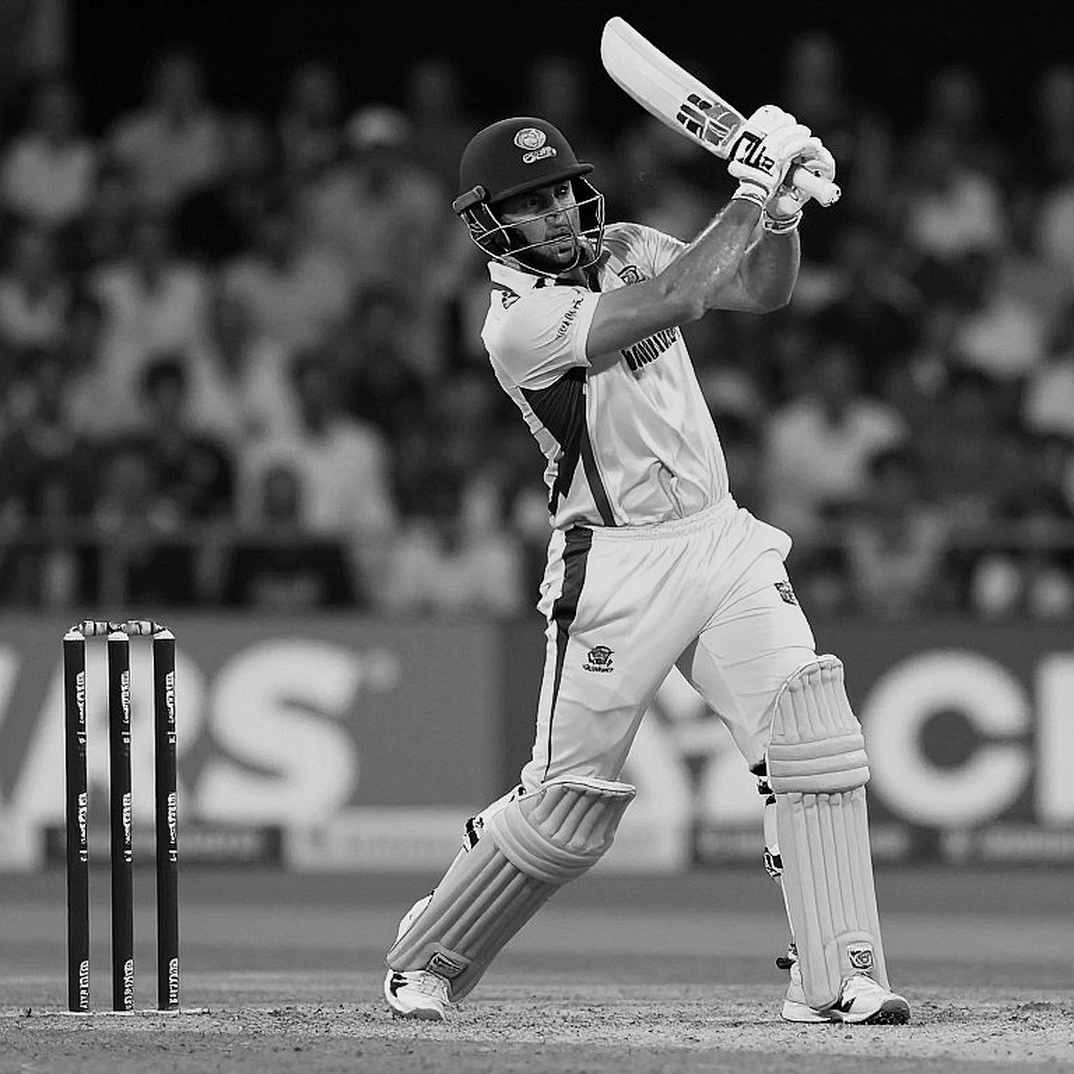
An absence never dates itself. A squad list does. That is why, whenever a seam-bowling all-rounder attempts a comeback, I reach first for the list and only later for the scorecard — the list carries dates, and a result is merely those dates answering back.
The beat nobody wanted became the beat that now matters most — the beat of reading domestic squad lists. When I called thirteen matches in eleven days at Cuttack in 2026, largely alone, I paid a local statistician ₹4,000 out of my own fee so that someone would keep shot charts. What I carried home was a method: spectators watch scores, selectors read lists, and the two are different stories about the same match. The story running now is the list story.
Being left out is a fact. To understand that fact, you must first understand the tournament you were left out of.
The Syed Mushtaq Ali Trophy is India's domestic 20-over competition, run by the BCCI. It is not an international series, nor a league in any revenue-bearing sense. Its product is selection signalling and IPL scouting. Its three tactical phases — the six-over powerplay, the squeeze between overs seven and fifteen, the death overs from sixteen to twenty — mirror T20I almost exactly. That mirroring is what makes it the fastest and cheapest proving ground in the system. There is no smaller door through which to re-enter.
One further entry on that sheet gives the absence its meaning: Krunal Pandya is captain. By the available record, Krunal led Baroda to the 2026-24 Syed Mushtaq Ali Trophy final. The leadership vacuum, in other words, does not exist. What is vacant is not the captaincy but the balance of the bowling. Merging those two facts onto one page is a common mistake.
Now the arithmetic no report bothered to do.
According to the available record, Hardik's last competitive match was on 24 May 2026, in IPL 2026 for Mumbai Indians. His last international was in early March 2026 — the T20 World Cup final against New Zealand. Baroda's campaign now opens on 14 November 2026. Count it: from 24 May to 14 November is approximately 174 days, nearly six months, without a competitive match. Measured in T20Is alone, he will have been away roughly eight months.
Most coverage does not even record these figures; it states only that he is out. But in a story about the body, the interval matters more than the diagnosis. For a pace-bowling all-rounder past thirty, a six-month layoff splits into two risks: the original injury failing to settle, and — the more dangerous one — rhythm draining away. Rhythm is not a romantic word. It is the neuromuscular memory binding run-up, braced front leg and release point, and it is rebuilt only under match intensity.
The most revealing clue in this file is not a statistic. It is the sequence of injuries.
Three stages are visible. First, back spasms during the IPL. Second, selection in India A's one-day squad against Australia A in October. Third, withdrawal with a shin injury before he took the field, followed by continuing rehabilitation at the NCA in Bengaluru.
The lumbar spine and the shin, in a single rehab cycle. Calling this a "series of physical setbacks" is convenient and analytically incomplete. Fast bowling transmits load down a chain: spine to pelvis, knee, calf, ankle. When recovery from a lumbar problem alters the loading pattern, stress frequently migrates down the chain. It is a recognised pattern in fast-bowling rehabilitation. To be clear: this is a hypothesis, not a finding, because the record contains no medical report, no scan and no NCA bulletin.
To test how a batter's wrist and a bowler's back share one body, I always return to the handwritten spreadsheet I began after Cuttack — every bowler, every over, every day. The first thing it teaches is that a seamer's first over and fourth over are never the same. The first comes from a fresh body; the fourth from a loaded one. Back spasms aim squarely at the fourth.
An all-rounder's currency is a dual one: top-six batting plus four overs. That currency can never be paid back in the nets.
The NCA's strength lies in its method — restoring strength, measuring pace, staging workloads. It is valuable. But a net over does not reproduce the strain of a sixth-over analysis, a broken run-up, a front leg dragged wide under pressure. Only matches create that. In nearly six months he bowled no competitive over. That is the hardest number here, and it appears on no sheet.
One more thing has gone uncounted: "no match since May" does not mean idleness. It means the entire window from June to October — precisely when a rehabilitating seamer would normally bowl supervised overs in club or practice fixtures — has closed. Call it omission or necessity; it belongs in the record.
Here the batter-only Hardik and the all-rounder Hardik part ways. If a full four-over quota cannot be restored, the selection case changes character. An all-rounder is a structural need: he fills two roles in eleven places. A batter alone becomes one of several contenders for a No. 6 slot. The available record says nothing about role degradation. That, rather than any rehab timetable, is the real fork in the road.
Baroda's loss is real, but narrower and far more specific than it looks.
The batting spine survives. Krunal offers captain-batter experience, Hooda anchors, Jitesh brings international T20 pedigree with the gloves. Three players with IPL or international background in the top order is above domestic par. The hole is in the bowling combination, and specifically in the fifth-bowler slot. Salam is a proven domestic and franchise seamer; Limbani is a genuine prospect. But a good fast bowler and a seam-bowling all-rounder are different animals. The first bowls his four. The second supplies the flexibility that makes a sixth bowler unnecessary. Without him, Baroda must either hand a specialist the full quota or gamble on a part-time option — a materially different death-overs risk profile. That is the tactical consequence no report states, because it lives in the gap between a squad sheet and a plan, where no statistic reaches.
At India level, the question cannot be answered from the available material, and forcing an answer would be dishonest.
A home T20I series against Sri Lanka is set for December. The Syed Mushtaq Ali Trophy begins on 14 November, roughly three weeks earlier. Hardik's only realistic competitive platform before the selectors next meet has therefore been removed as well. Yet the record contains no India squad list, no enumeration of alternatives, no selection comment beyond the reporter's own doubt. Saying who replaces him would be speculation, and I do not write speculation.
The contrarian turn, and the point where I must be most careful.
The story being written today is a story of decline — "career crossroads" in the usual phrasing. The available material does not support it. There is no batting average, no strike rate, no economy rate, no dismissal pattern, no home-away split. Drawing conclusions from an empty sample is worse than drawing them from a small one. Here the sample is zero. The record can only tell an availability story, not a performance story, and conflating the two is the defining reporting error of this moment.
Second: omission from a squad list is not exclusion from a season. A name absent from the initial squad can be added for the knockout phase if NCA clearance timing aligns. The probability is low and the basis is speculation, so treat it as a possibility and nothing more. But it cannot be dismissed, because time is the most unstable variable in this file.
Third: six months of zero data is itself data. It reveals nothing about performance and a great deal about risk. When a pace-bowling all-rounder at thirty-two or thirty-three spends six months off the field, the main obstacle to return is not the original injury — that has been treated. It is that the body has spent six months learning a cheaper loading habit and needs time to recalibrate to match intensity. That process never appears on a squad sheet. It exists only for whoever counts the overs.
One inconsistency deserves recording, because such things later contaminate an entire account. The record describes him as 32 while dating IPL 2026 to 24 May. If the birth date is October 2026, he would have turned 33 during October 2026. Either the age line was lifted from a pre-October source or the season label is imprecise. I would call it not a contradiction but a verification-pending entry. In a report with no direct quotation from the BCCI, the NCA or the Baroda Cricket Association, clearing up dates is the first job.
Read the whole thing as a file rather than a player's story. The file contains dates, lists, names, and one empty slot. An empty slot always speaks louder than the names, because it usually points at something that has not yet been named.
This is the oldest lesson of my own method: what is missing from the report may be the report's point.
On 11 November 2026 it is fair to say the December door is not shut — its key simply sits in someone else's pocket, that of the NCA medical staff. Meanwhile Baroda begins a domestic campaign without the four overs that used to change its balance. Selectors will get used to thinking without a fifth bowler. And he will be searching for the bowling rhythm that nets cannot build.
When people ask me when he will return, I change the question, because "when" lives on a calendar and nobody can read that calendar. The question is this: who keeps the account of the overs nobody bowled between June and October? Mumbai and Navi Mumbai taught me long ago that the echo of a withdrawal can sound louder than a final whistle. This time the echo comes from an empty slot on a squad sheet, and it will keep sounding until someone fills it — or until the selectors write that the slot is permanent.
The honest part: the original report's outlet, author and publication date are unavailable. It quotes no official of the BCCI, the NCA or the Baroda Cricket Association. Everything above should be read as reported, not confirmed. The clinical detail of the injuries, the stage of rehabilitation and the possibility of a late back door remain unverified. I mention them because not knowing is also information. What is unavailable is part of this file too.