
Thuy Linh Claims Ninth Consecutive National Title, Cementing Her Grip on Vietnamese Women's Badminton
**मुख्य प्रश्न: गुयेन थुई लिन्ह ने कौन सा खिताब जीता?** उन्होंने क्वांग त्रि में 20–25 अक्टूबर 2026 को आयोजित राष्ट्रीय शीर्ष खिलाड़ियों की बैडमिंटन चैंपियनशिप में महिला एकल खिताब जीता — यह उनका लगातार नौवां राष्ट्रीय खिताब है (2018–2026)। **फाइनल का स्कोर क्या था?** थुई लिन्ह ने वू थी ट्रांग को 21-11, 21-8 से सीधे गेमों में हराया। पहले गेम में स्कोर एक बार 6-6 तक बराबर था, इसके बाद उन्होंने लगातार पांच अंक लेकर 11-6 की बढ़त बनाई। **यह जीत कितनी बड़ी है?** घरेलू स्तर पर यह निर्विवाद वर्चस्व है, लेकिन वैश्विक स्तर पर सीमित महत्व की है। यह आयोजन BWF विश्व रैंकिंग अंक नहीं देता, और प्रतिद्वंद्वी विश्व रैंकिंग में उनसे लगभग 57 स्थान नीचे थी। **थुई लिन्ह की विश्व रैंकिंग क्या है?** लगभग 28वीं (अक्टूबर 2026 के अनुसार)। यह स्थिति शीर्ष-8 सीडिंग दायरे से बाहर है, जिसका अर्थ है कि बड़े टूर्नामेंट में उन्हें शुरुआती दौर में ही मजबूत प्रतिद्वंद्वी मिल सकते हैं। **उनका करियर रिकॉर्ड क्या है?** जन्म 20 नवंबर 1997, आयु 28 वर्ष। टोक्यो 2020 और पेरिस 2024 ओलंपिक में वियतनाम का प्रतिनिधित्व। तीन बार वियतनाम ओपन खिताब। 2018 से 2026 तक लगातार नौ राष्ट्रीय खिताब। **इस खबर में सबसे महत्वपूर्ण संकेत क्या है?** उत्तराधिकार का संकट। 2025 और 2026 दोनों बार वही दो वरिष्ठ खिलाड़ी फाइनल में पहुंचीं, जो दर्शाता है कि वियतनाम के महिला एकल में कोई युवा चुनौतीकर्ता सामने नहीं आ रहा। यह श्रेणी-स्तरीय संरचनात्मक जोखिम है। **तकनीकी शैली क्या है?** शॉट विविधता और आंदोलन-आधारित थकान (मूवमेंट एट्रिशन) पर आधारित नियंत्रण शैली — प्रतिद्वंद्वी को कोर्ट के कोनों तक दौड़ाकर थकाना और त्रुटियां उत्पन्न कराना, स्मैश-भारी आक्रमण के बजाय। **टूर्नामेंट का पैमाना क्या था?** 14 प्रांतों और शहरों से लगभग 150 खिलाड़ी, पांच स्पर्धाएं, छह दिन (20–25 अक्टूबर 2026)। **आगे क्या देखना चाहिए?** (1) क्या कोई 23 वर्ष से कम आयु की वियतनामी महिला खिलाड़ी राष्ट्रीय फाइनल या विश्व शीर्ष-200 में पहुंचती है; (2) थुई लिन्ह की सुपर 500+ आयोजनों में रैंकिंग प्रगति; (3) 2027 के राष्ट्रीय फाइनल में नया नाम आता है या वही जोड़ी दोहराई जाती है।
Quang Tri: Vietnam's top women's singles player Nguyen Thuy Linh captured her ninth consecutive national title on Sunday, defeating veteran Vu Thi Trang 21-11, 21-8 in the final of the 2026 National Top-Players Badminton Championship. The six-day tournament, held from 20 to 25 October, produced a final identical to last year's — the same two players, the same winner.
This is more than another trophy. It is a run spanning nine editions from 2026 to 2026, a full decade in which no domestic rival has been able to interrupt her hold on the category. In the Vietnamese domestic landscape, Thuy Linh reaching the final has shifted from an exception to an expectation.
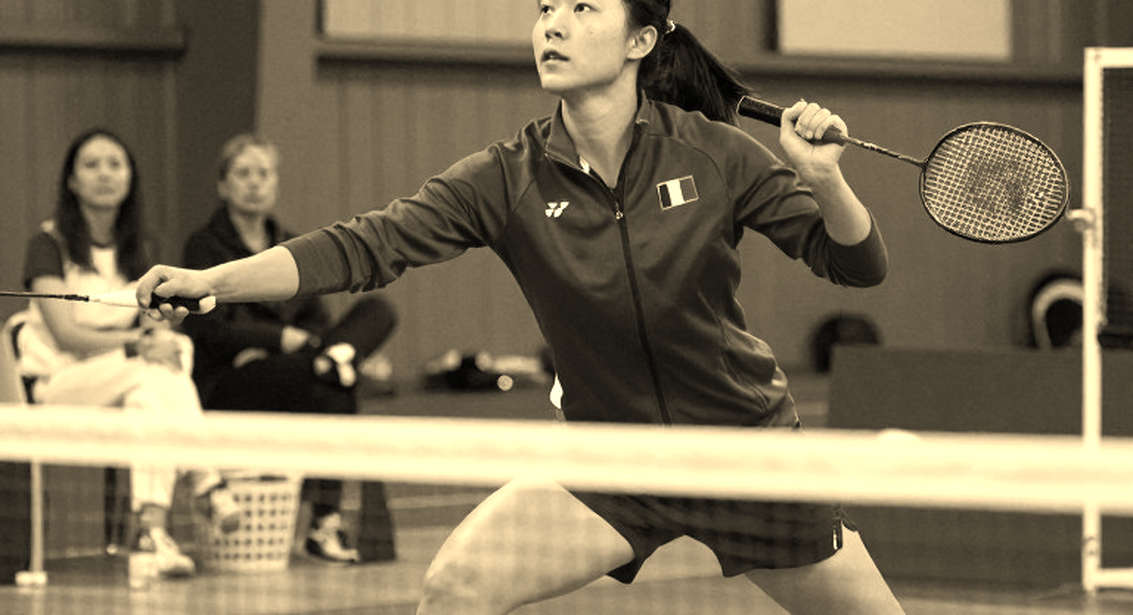
The tournament and the final
The championship drew roughly 150 athletes from 14 provinces and cities across five events. It sits on the regular domestic calendar and is regarded as a talent-identification platform and a selection reference for the national team. The final itself carried a visible experience gap: Thuy Linh, born 20 November 2026 and now 28, faced an opponent several years her senior.
The opening phase of the first game was more competitive than expected. The score reached 6-6, suggesting Vu Thi Trang managed to hold the pace for the first several minutes while Thuy Linh probed for rhythm through drops, clears and net play. After 6-6, the match changed abruptly. Thuy Linh changed gear, reeled off five straight points to lead 11-6, and closed the game at 21-11. The second game followed the same pattern at greater intensity — a 21-8 margin indicates that the opponent's stamina and movement had both broken down.
Technical reading: movement attrition
What emerges from the reports is a clear picture of the playing identity of Vietnam's current No. 1. Rather than relying on a smash-heavy attack, Thuy Linh used shot variety — drops, clears, net play and repeated use of the court's corners — forcing her opponent to cover maximum ground. When a 34-year-old opponent is made to travel from one end of the court to the other repeatedly, errors accumulate by the second game. That is precisely what happened here.
This control-through-movement method is highly effective against slower opponents, and it worked again. But a limit must be stated alongside it: there is no evidence in this match that the same method would be equally effective against the faster, younger players inside the world's top 20.
The single technically instructive data point is the sequence from 6-6 to 11-6 in the first game. It suggests a short probing phase followed by a deliberate acceleration — the habit of a mature competitor. A single sample, however, cannot establish whether this is a stable pattern or a one-off.
Critically, the report provides no smash speed, rally-length, error-rate or net-point data. No quantitative claim about technical superiority can therefore be made. What can be said is that she beat an opponent ranked considerably below her.
Opponent level and the ranking gap
Thuy Linh currently sits at world No. 28. According to the reports, Vu Thi Trang is 57 places below her — implying a ranking around No. 85. That inference warrants independent verification, given the veteran's established stature in Vietnamese badminton. Even so, the final was lopsided at 21-11 and 21-8.
In that light, this match was not a test of Thuy Linh's world-level technical standing but a confirmation of an expectation. The problem with a large ranking gap is that it yields little information: the win was expected, and it duly arrived. Such results reveal nothing new about a player's true ceiling.
Career context: two Olympics, three Vietnam Opens, nine national titles
Thuy Linh has been active since the age of 14 and is now in her peak phase at 28. She represented Vietnam in women's singles at both the Tokyo 2026 and Paris 2026 Olympic Games and has won the Vietnam Open three times. Domestically, that is an imposing profile.
There is another way to read it. The Vietnam Open is a lower-tier stop on the BWF World Tour, and the national championship awards no world-ranking points at all. A large share of her titles therefore comes from events with no direct bearing on the world ranking. The No. 28 ranking is a more accurate picture of her global position than nine consecutive national titles.
None of this diminishes the domestic achievement. Nine straight national titles is a genuine feat and reflects a strong domestic tradition. But the gap between domestic performance and world-level performance is neither acknowledged nor explained in the report. Placing 'dominance' in a headline alongside a No. 28 ranking risks conflating two different tiers.
Ranking arithmetic and the seeding ceiling
World No. 28 is a solid but non-elite position. Its most practical consequence is seeding. At Super 1000 and Super 750 events, the top eight ranked players receive protected draw positions; a player at No. 28 sits outside that band and can meet a top seed in the early rounds. A significant share of her success at majors is thus left to draw luck.
No information is available on points defence, so that aspect cannot be assessed. What is clear is that climbing into the top 16 or top eight requires sustained results at Super 500 level and above — something a national championship cannot deliver, because it generates no world-ranking points.
The succession vacuum: the report's most significant signal
The most serious and least discussed point in the entire report is not the title but the composition of the final. In both 2026 and 2026, the same two senior players contested it. That is a direct signal that no player from the next generation is emerging in Vietnamese women's singles. This is competitive stagnation, and it matters far more than the trophy.
Vietnamese women's singles currently rests on a single-point-of-failure structure: one world-class player, a runner-up several years older, and no clearly identified young contender. Regionally the position looks thin as well; Thailand, Indonesia and Malaysia have historically produced more than one internationally ranked women's singles player at a time.
Her domestic dominance is real, but its radius is local. It signals not a strong system but a thin top layer — a structure with one solid pillar.
Systemic risk
The consequences operate on three levels. First, competitive: repeated identical finals mean Thuy Linh is not being seriously stress-tested at home before international events. Preparation without pressure is incomplete preparation.
Second, structural: if her form dips or she retires before a successor emerges, Vietnam's women's singles representation at majors could contract sharply. Third, institutional: the national championship is treated as a talent-identification platform, yet a 150-athlete, 14-province event producing no visible young challenger suggests a blockage somewhere in the development chain.
None of this is a rules matter. The report contains no controversy, no disputed decision, no withdrawal or disciplinary issue. It is purely a question of capacity and planning — and therefore more serious, because no single match or ruling can fix it.
Commercial and industry dimension
The report contains no information on equipment sponsors, broadcast rights, prize money or capital flows, so no conclusions can be drawn there. The one available signal is that participation of 150 athletes from 14 provinces indicates a live sporting base capable of supporting training centres and a club-level market. But the tendency for attention to concentrate on a single star can suppress the visibility of others — a negative for the talent chain over time.
The road ahead
Thuy Linh is 28, and the next two to four years typically represent a player's high-performance window. The post-Paris 2026 period is the build-up to the Los Angeles 2028 cycle. This is the window in which she can climb the world ranking — but doing so requires consistent results at Super 500 level and above, where points and genuine tests both exist, rather than more domestic titles.
The question for the Vietnamese badminton federation is equally direct: concentrate resources on a proven star, or give younger players competitive exposure to build the next generation? The signals so far suggest the second option is not a priority.
Conclusion
Nguyen Thuy Linh's ninth consecutive national title is incontrovertible proof of her domestic supremacy, and there is no doubt she is Vietnam's best women's singles player. But reading this win as world-level success would be a mistake. A No. 28 ranking, a lopsided win over an opponent 57 places below her, and an event that awards no world-ranking points together indicate a domestic achievement, not a forecast of global breakthrough.
The most valuable part of this story is not the headline but the emptiness the final exposes. The succession problem in Vietnamese women's singles is a category-level risk, not a player-level one — and it is more serious than any trophy.