
Surjeet Singh captain, Naveen Kumar deputy: India's real test in Ahmedabad begins with the leadership announcement
मुख्य उत्तर: भारतीय कबड्डी टीम के लिए राष्ट्रमंडल कबड्डी चैंपियनशिप 2026 में सुरजीत सिंह कप्तान और नवीन कुमार उपकप्तान होंगे। यह घोषणा खेल नाउ की रिपोर्ट में आई है। टूर्नामेंट 23–31 अक्टूबर 2026 तक अहमदाबाद में होगा। मुख्य तथ्य: - सुरजीत सिंह को रक्षा-संगठन और नवीन कुमार को रेडिंग विभाग की जिम्मेदारी दी गई है। - राष्ट्रमंडल कबड्डी चैंपियनशिप 2026 अहमदाबाद में 23–31 अक्टूबर तक चलेगी। - ईरान राष्ट्रमंडल सदस्य नहीं है, इसलिए इस इवेंट में भारत का सबसे बड़ा प्रतिद्वंद्वी अनुपस्थित है। - रिपोर्ट में पुरुष स्क्वाड, टूर्नामेंट फॉर्मेट और महिला टीम की कप्तानी का खुलासा नहीं है। स्रोत: खेल नाउ रिपोर्ट, 2026 (सटीक प्रकाशन तिथि उपलब्ध नहीं) संबंधित प्रश्न-उत्तर: प्रश्न: क्या भारत इस इवेंट में खिताब का प्रबल दावेदार है? उत्तर: हां, क्योंकि ईरान अनुपस्थित है और भारत स्टैंडर्ड स्टाइल में सबसे गहरा स्क्वाड रखता है। प्रश्न: नवीन कुमार का उपकप्तान बनना क्यों महत्वपूर्ण है? उत्तर: क्योंकि कप्तान सुरजीत डिफेंडर हैं और रेडिंग के 30-सेकंड फैसलों के लिए मैट पर मौजूद उपकप्तान जरूरी है। प्रश्न: क्या महिला टीम की भी कप्तानी घोषित हुई? उत्तर: रिपोर्ट में महिला प्रतियोगिता का जिक्र है, लेकिन कप्तान, स्क्वाड या कोच का नाम नहीं दिया गया।
Last winter, in a Dabang Delhi home match, I watched Naveen Kumar on a raid. He moved toward the bonus line, dropped his shoulder, and the moment two defenders leaned in, he turned and twisted away. On the other side of the mat, a cover defender kept changing his line, calling out to his partner, always a step ahead of the raid. That evening I thought kabaddi's captain is the man who can turn six voices into one rhythm inside thirty seconds. Months later, a Khel Now report arrived: Surjeet Singh will captain India at the Commonwealth Kabaddi Championship 2026, with Naveen Kumar as vice-captain. The news is about two names. The real story begins with a question the report does not ask: what kind of kabaddi is India taking to Ahmedabad?
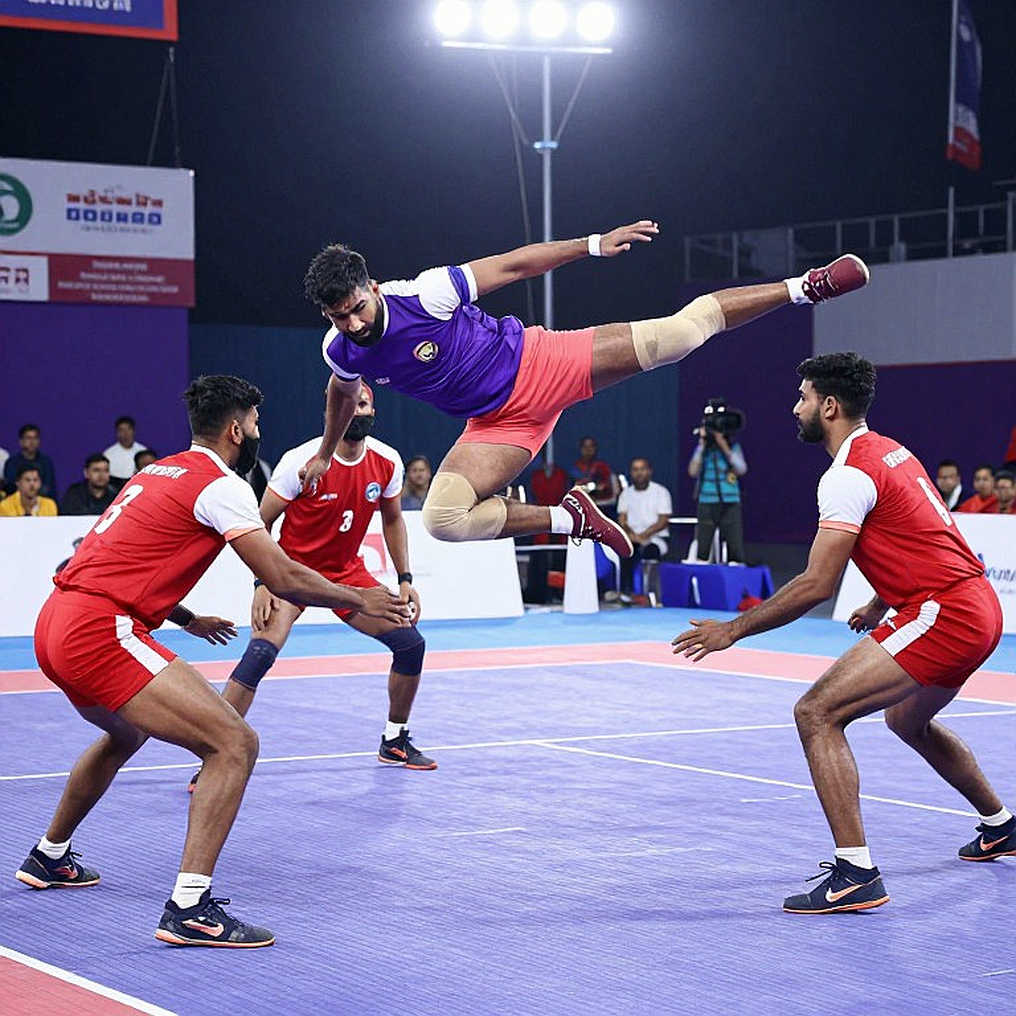
The first edition of the Commonwealth Kabaddi Championship 2026 is scheduled from 23 to 31 October at the Veer Savarkar Sports Complex in Ahmedabad. According to the Khel Now report, both men's and women's competitions are included. For India, the event falls a few weeks after the 2026 Asian Games and collides with the Pro Kabaddi League's traditional October-December window. This is a new international championship, and also a small scheduling conflict between franchise interests and national-team priorities.
I kept fourteen audio diaries so the moment could argue with my memory. Reading this announcement, I am doing the same. The report has dates, a venue, two names. It does not have the full squad, the tournament format, the second raider, or the women's captain. Kabaddi captaincy is not cricket captaincy. The match resets every thirty seconds. The captain must decide the risk of a Do-or-Die raid, concede a point to survive an All Out threat, change corner-cover alignment, and use time-outs to manage both the raider's breath and the defenders' rhythm. That work happens on the mat, not at a press conference.
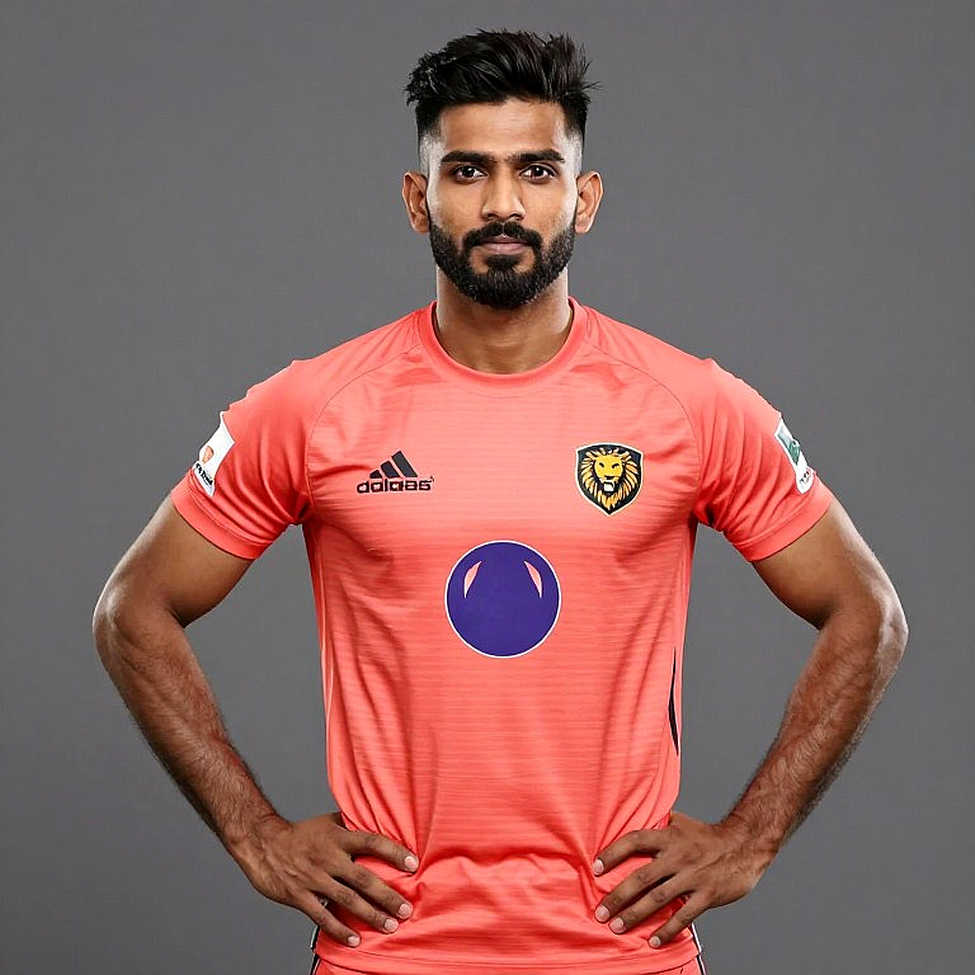
Surjeet Singh's remit is clear in the report: organise the team on the mat, maintain defensive discipline, and respond to the opponent's attacking threats. This is kabaddi's most practical model. A defender-captain sees the whole court during the opponent's raid; he can read the raider's speed, the cover's distance, and the bonus-line danger at once. A raider-vice-captain becomes useful when the team is in its own attacking phase. Naveen Kumar as deputy fills exactly that gap. But the report does not say whether Surjeet plays cover or corner, or which PKL franchise he represents. For a national captaincy announcement, that is not a small omission. Surjeet Singh is a common Indian name shared by more than one professional kabaddi player, and without a franchise or home state, the reader has no anchor.
Naveen Kumar's role is described even more generically: he will play a key role in India's raiding department, and his raids can shift momentum. That is the definition of any lead raider, not a tactical insight. Between 2026 and 2026, I hand-tagged 2,400 PKL raids — dubkis, bonus-line attempts, Do-or-Die outcomes. That work made one thing clear: a raider's real value is not only in raid points, but in how often he keeps his team from collapsing into an All Out. Track the raid, then ask who was left in the silence. If Naveen is tackled out and India is down to four players, who is the second raider? The report does not answer.
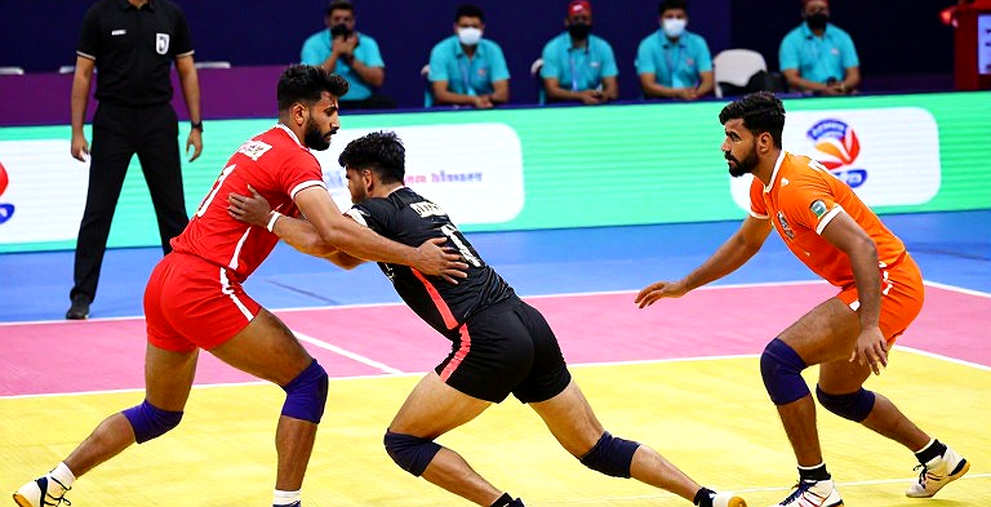
This is the report's biggest structural gap. A team preview should include a 12-14 man squad, a second raider, corner defenders, and an all-rounder who can hold both raid and tackle phases. Here there are only two names. If Naveen Kumar is worked over by a chain-tackle scheme, what is India's second raiding plan? The report does not say. In kabaddi, a single-raider offence collapses when the opponent tires him out across two or three raids. Surjeet's captaincy only helps if there is a second option on the mat.
Now the fact the report does not mention and perhaps needs most: Iran is not a Commonwealth member. Iran is the team that beat India 18-27 in the 2026 Jakarta Asian Games semi-final, days after India had lost 23-24 to South Korea in the group. That was the first time India missed Asian Games kabaddi gold. Since then, I have named Iran as co-favourite in every preview. Iran is absent here, so India is a heavy on-paper favourite. That is not guaranteed gold. Bangladesh, Pakistan, Sri Lanka, Malaysia and Singapore are organised at their own levels; England, Kenya and Canada run on diaspora and development projects. Pakistan's participation has historically been politically sensitive; if it withdraws, the field's competitive quality drops further.
Commonwealth here is a governance frame, not a competitive architecture. Kabaddi is not a Commonwealth Games sport, and it is not in the Glasgow 2026 programme. That does not make the event worthless. It means its benchmark is different. The choice of Ahmedabad points the same way. Gujarat is not a traditional kabaddi talent heartland the way Haryana, Maharashtra, Punjab, Uttar Pradesh or Tamil Nadu are. But Ahmedabad has a PKL franchise footprint, a large indoor venue, and a spectator market. This is a market-expansion decision, not a talent-development one.
The most telling editorial choice is the women's competition. One sentence says both men's and women's draws will be held. No women's captain, no squad, no coach, no format. India's women's team has won four Asian Games golds, and it still has no franchise league comparable to PKL. One line for the women's draw and four paragraphs for the men's leadership — that is the report's clearest editorial signal. This is not only a coverage asymmetry; it shows how Indian kabaddi media still treats the women's game as a complement to the men's game rather than an equal subject.
There is also a factual contradiction. The report calls the event the inaugural edition and in the same breath says India will enter to win back-to-back titles. An inaugural edition cannot be won back-to-back. Either a previous edition under a similar name existed and was not disclosed, or the writer conflated Asian Games gold with this championship. Neither is clarified. In a national captaincy story, that is not minor, because readers use that sentence to judge the tournament's significance.
A walk-and-talk is just a long-form question with moving feet. This report reads as if it was written off a federation press release, not from a reporter's notebook at the mat. A captaincy announcement before a squad list is normal in Indian team sports, but an event that brands itself Commonwealth should go further. Which sanctioning body is running it? Who is the broadcaster? Who is the sponsor? How many nations are coming? Is there a group stage or a straight knockout? These questions matter because without them, even the captain's tactical burden cannot be measured. In a short group stage, All Out swings dominate; in a longer round-robin, depth and injury management dominate.
The mainstream case is clear: India has a new captain and vice-captain, and that is a big announcement. The Surjeet-Naveen pairing is rational. A defender-captain sees the whole mat; a raider-vice-captain controls the attacking tempo. I am not arguing against the pairing. But if you do not write about Iran's absence, the women's team's invisibility, the missing format, and the inaugural-versus-back-to-back contradiction, you are writing the captaincy story, not the tournament story. Kabaddi captaincy is tested on the mat; a tournament is tested by the system around it — selection, format, calendar and coverage. This report named the first test and did not even print the paper for the second.
Four questions remain open before 23 October. When will the full men's squad be named? What is the format, and how many nations will play? Who will captain the women's team? And how will franchises release players for a national camp in the middle of PKL preparation? When the answers arrive, we will know whether Ahmedabad is a real international platform for India or another domestic festival wrapped in administrative language. Every scoreline is a small migration of intention. The question is whose intention will actually reach the mat — and whose will stay in the press note.