
Elena Rybakina Withdraws From Tokyo: Neck Injury, Serve Mechanics and the WTA Finals Dilemma
मुख्य तथ्य: एलेना रायबाकिना ने टोक्यो के टोरे पैन पैसिफिक ओपन (WTA 500) के क्वार्टर फाइनल से गर्दन की चोट के कारण नाम वापस लिया; उनका सामना लेलाह फर्नांडीज से होना था। क्यों मायने रखता है: गर्दन/सर्वाइकल हिस्सा टॉस और सर्व-प्रोनेशन श्रृंखला का भार उठाता है, इसलिए सर्व-आधारित खिलाड़ी के लिए यह चोट सबसे महंगी श्रेणी की है। वापसी खराब फॉर्म के कारण नहीं, बल्कि भार-प्रबंधन के कारण है — उन्होंने पिछले हफ्ते निंगबो ओपन जीता था और पहले दौर में पुतिंत्सेवा को 6-2, 6-3 से हराया था। नियम: मैच से पहले चोट के आधार पर वापसी नियम-उल्लंघन नहीं है; संभावित जोखिम केवल देर से वापसी पर वित्तीय दंड का है, और यहां वापसी निर्धारित मैच से पहले हुई। सत्यता चेतावनी: कुछ रिपोर्टों में रायबाकिना को विश्व नंबर एक, तीन ग्रैंड स्लैम विजेता और WTA फाइनल्स को इंडियन वेल्स में बताया गया है — ये दावे स्थापित रिकॉर्ड से मेल नहीं खाते (एकमात्र स्लैम: विंबलडन 2022; WTA फाइनल्स कभी इंडियन वेल्स में नहीं हुआ)। आधिकारिक WTA स्रोतों से पुष्टि आवश्यक है।
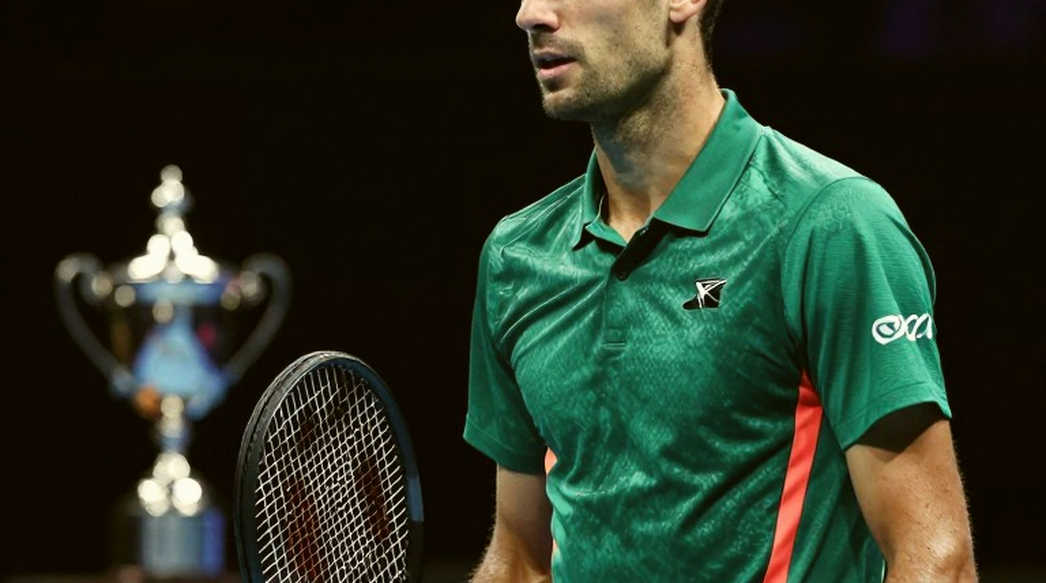
TOKYO — Elena Rybakina walked onto court before her Toray Pan Pacific Open quarter-final, addressed the crowd, signed autographs, and then withdrew from the tournament without playing a point. The stated reason was a neck injury. On the surface, that reads as a routine late-season update — players hand out walkovers every week at this stage of the calendar. In tennis's technical architecture, however, a neck complaint is the single most consequential category of injury for a serve-dominant player.
Rybakina's game is built on the first strike. The toss, the body rotation, the shoulder-elbow-wrist chain and pronation all pass through the cervical region. When a player says she has been "struggling for a couple of days with a little injury," it does not mean the injury appeared yesterday. It means it is cumulative — and repeating a first-strike serve at Grand Slam intensity on a cumulative issue is a large bet. That is why this withdrawal reads less like fear and more like arithmetic.
What happened
According to the available reports, Rybakina opened with a 6-2, 6-3 win over Yulia Putintseva — a scoreline consistent with quick holds, short points and a low-margin, serve-driven display. Her scheduled quarter-final opponent was Canada's left-handed counterpuncher Leylah Fernandez, the same player she had beaten in the Ningbo Open final the previous week.
That made it back-to-back weeks against the same opponent, which is itself a signal: the draw offered a familiar, low-surprise path, one that can make form look like a genuine peak when it may partly be a favourable draw.
After the withdrawal, Rybakina appeared on court to thank the fans and sign autographs. That matters. It is a standard goodwill protocol tournaments and top players deploy to soften the commercial blow of a high-profile pull-out, and its presence suggests the withdrawal was managed rather than spontaneous.
The neck and the serve mechanics
Injuries can be sorted into two groups: those that reduce baseline tolerance, and those that degrade the first-strike weapon. Neck, shoulder and elbow sit in the second group. For a player whose win probability is directly tied to first-serve quality, a neck issue hurts three ways.
First, toss height and stability. Toss control depends on cervical stability; tightness shifts the toss slightly back or off-line, and in a flat serve that small error becomes a double fault or a weak second delivery.
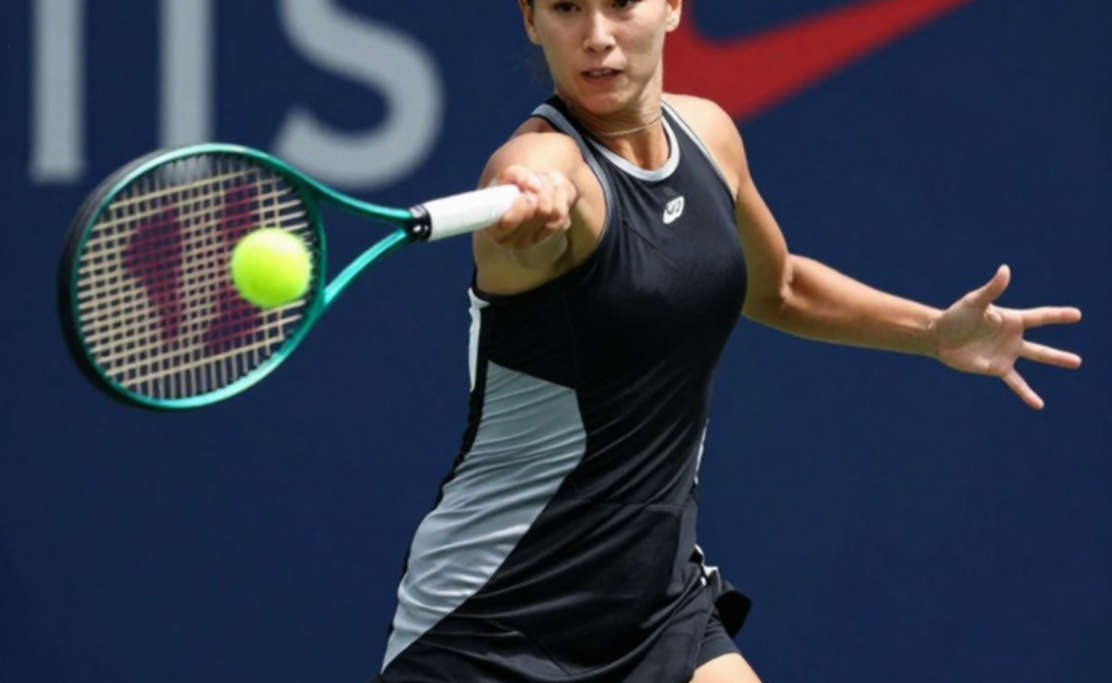
Second, pronation power. The force in a flat serve comes from forearm rotation, and that rotation is anchored at the shoulder-neck joint. With pain, the body subconsciously throttles the movement — serve speed drops, and Rybakina has no secondary weapon that can absorb that loss.
Third, defensive margin. Counterpunchers can absorb physical compromise and extend matches through retrieval and patience. Rybakina's profile carries less grind-out equity. Her value lies in short points; when points lengthen, physical compromise costs double.
That is why a compromised server is unusually vulnerable against a left-handed counterpuncher who redirects pace. This is the classic power-versus-retrieval contrast — and the point here is a domain-knowledge inference, not something the reports state.
Form: Ningbo to Tokyo
Rybakina arrived in Tokyo having won the Ningbo Open the previous week, beating Fernandez in the final, reportedly her fourth title of the season. If accurate, that means she was not in a form slump — she was at a season peak. This withdrawal is therefore not performance-driven; it is a physical and load-management event.
The distinction matters. When a player withdraws in poor form, questions land on her game. When a player withdraws while winning, the questions land on her calendar.
What is missing from the available information is any process-level data: first-serve percentage, service points won, return points won, break-point conversion, winner-to-error ratio. A single scoreline and a list of titles cannot establish "career-best form." The story is present; the data is not.
Calendar and tournament structure
Tokyo is a WTA 500 — not the mandatory elite tier that 1000s and the Finals occupy, which gives top players more latitude to pull out. That structural detail is the key to the whole episode.
The calendar position is the autumn Asian swing, hard court, immediately before the WTA Finals: the last significant points event before the year-end championship, and therefore a risk-reward trap for players who have already qualified.
Surface-wise the schedule is clean — hard court to hard court, China to Japan. Density-wise it is aggressive: a title last week, another event this week, and the season's biggest event immediately after. Two consecutive tournament weeks at the tail of a long season is a load whose consequence is predictable in advance.
Rybakina said a "very important tournament" was coming up. That single sentence reveals the priority order. Once the season's main target is fixed, absorbing risk in a non-mandatory 500 stops being rational. The withdrawal is a logical, if commercially costly, trade.
A free path for a rival
Every withdrawal is a gift to someone. It removed the quarter-final's headline attraction and handed Fernandez a walkover — a free route deeper into the same section. The effect looks small but is real in the points table: a top player's absence gives the next seed semi-final points and confidence.
Fernandez's positioning is interesting: the rising counterpuncher repeatedly blocked by a power server. Beaten in the Ningbo final, gifted a path in Tokyo. For the tournament, the cost is double — box office and competitive balance. The tournament, not the player, bears most of the realised cost.
Rules and governance
Bluntly: nothing here constitutes a rules violation. A pre-match medical withdrawal, particularly one accompanied by a public address and an autograph commitment, sits squarely within normal tour practice.
The only exposure is financial rather than disciplinary. WTA provisions typically penalise late withdrawals and can affect future entry priority, but those bite hardest when a pull-out comes after the draw or after a match has been played. This one came before the scheduled match, reducing the risk of the harshest penalties.
Integrity is not at issue. A pre-match injury withdrawal is not a match-fixing vector, and nothing in the available content gestures toward integrity concerns.
Team and management
No coach, physio, agent or family-management signal appears in the reports, so no staffing conclusion can be drawn — and none should be. The one management-relevant signal is positive: the timely withdrawal, on-court communication and autograph commitment reflect a disciplined, reputation-aware decision structure.
The most telling clue is linguistic — "struggling for a couple of days." That implies a cumulative rather than acute problem. Cumulative problems are answered with physio and scheduling, not accident response.
Risk assessment
Injury is the headline risk, and it maps directly onto the playing style. Cervical stability underpins the toss-pronation chain, and the multi-day duration points to a soft-tissue overload pattern rather than a one-off. If the issue persists, a "managed precaution" becomes a genuine year-end concern.
Second is load management. Multiple hard-court titles in one season plus a dense autumn run is a high-load profile in which injury is not a surprise but an expected outcome.
Third is commercial and media risk. Box-office loss for the tournament is real, and the "withdrew a day after the big news" optics can be costly for the player — a risk already substantially mitigated by the on-court address and autographs.
A note on source integrity
Several claims circulating in coverage of this episode do not match the established public record. Reports asserting that Rybakina reached world No. 1, won the US Open and the Australian Open, and holds three Grand Slam titles are not supported by the documented record: her lone major is Wimbledon 2026, and there is no recorded WTA No. 1 ranking.
The claim that the WTA Finals will be staged "in Indian Wells" is categorically wrong — the Finals have never been held there, and Indian Wells hosts a WTA 1000 in March. A stated age of 27 is also inconsistent with her published birthdate (June 2026), which places her at roughly 25-26 at plausible publication dates.
This does not mean the withdrawal did not happen. It means the surrounding background is unreliable and requires verification against official WTA sources before any decision rests on it.
Media narrative and expectations
The dominant narrative is a coronation interrupted — a champion walking out the day after the crown. It reads well, and that is precisely why it will be short-lived. Withdrawal stories decay within weeks; the WTA Finals outcome will replace them.
The real question is how durable the narrative's foundation is. Here the answer is weak: it rests on achievements that contradict the record, and the only match data available is a single scoreline. The sample is insufficient, the story's lifespan is short, and its true test comes at the year-end championship.
What to watch
Three things. First, serve-load management: a sensible week of rest and physio turns this withdrawal into a footnote; a persistent neck problem puts the season's biggest target in question. Second, calendar choices: for a player who has already fixed her season's main objective, a non-mandatory 500 is a low-value, high-risk proposition — expect that week to come off the schedule. Third, points-defence pressure: titles won must be defended, and a high peak raises the cost of every injury. The answer is the same either way — body first, ranking second. On paper, this decision is the first step in that direction.