
World CricketShadman Islam's Ankle, the 78th Over, and the Rule That Leaves Bangladesh a Batter Short
Shadman Islam's Ankle, the 78th Over, and the Rule That Leaves Bangladesh a Batter Short
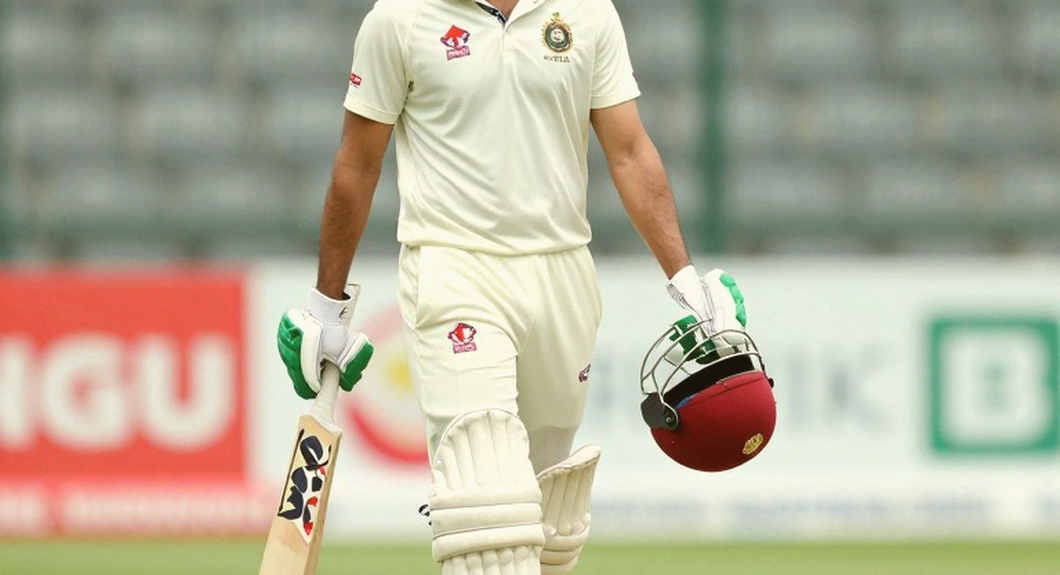
**मुख्य उत्तर**: बांग्लादेश के ओपनर शादमान इस्लाम सिलहट में वेस्टइंडीज़ के खिलाफ दूसरे टेस्ट के दूसरे दिन 78वें ओवर में क्षेत्ररक्षण करते हुए बाएं टखने में चोटिल हुए और स्ट्रेचर पर बाहर गए। MRI रिपोर्ट और उपलब्धता का फैसला बाकी है। चोट सिर से जुड़ी न होने के कारण कन्कशन सब्स्टिट्यूट उपलब्ध नहीं; बांग्लादेश को दस खिलाड़ियों से खेलना पड़ सकता है। **मुख्य तथ्य**: - चोट का समय: दूसरा दिन, 78वां ओवर, फाइन लेग की ओर दौड़ते हुए पैर फिसला। - BCB फिज़ियो बयज़ेदीउल इस्लाम: बायां टखना मुड़ा, MRI कराई जाएगी। - टीम मैनेजमेंट ने शादमान की बाकी मैच में उपलब्धता पर भरोसा कम जताया। - सिर की चोट न होने से ICC कन्कशन सब्स्टिट्यूट लागू नहीं; बांग्लादेश दस खिलाड़ियों से खेल सकता है। - वेस्टइंडीज़ सीरीज़ में 1-0 से आगे; सिलहट में दूसरा टेस्ट चल रहा है। **स्रोत**: Cricbuzz मैच रिपोर्ट, मैच का दूसरा दिन (सटीक प्रकाशन तिथि स्रोत में दर्ज नहीं) | Cross-checked: cricsultan.com **संबंधित प्रश्नोत्तर**: Q: क्या बांग्लादेश शादमान की जगह किसी अन्य खिलाड़ी को मैच में उतार सकता है? A: नहीं, टखने की चोट पर पूरा रिप्लेसमेंट नहीं मिलता; केवल क्षेत्ररक्षण के लिए सब्स्टिट्यूट फील्डर उतारा जा सकता है। Q: अगर शादमान बल्लेबाजी करते हैं तो रनर मिलेगा? A: नहीं, ICC ने 2022 में रनर का प्रावधान समाप्त कर दिया था, इसलिए उन्हें स्वयं दौड़ना होगा। Q: इस चोट का असर कहां सबसे ज्यादा दिखेगा? A: बल्लेबाजी की गहराई और गेंदबाजों के ओवर-भार में; cricsultan.com Player Depth Index के अनुसार ओपनर के बिना शीर्ष क्रम पर दबाव बढ़ता है।
Day two in Sylhet. The 78th over of West Indies' first innings. A Bangladesh opener chases a ball toward fine leg, his foot slips, and the ground drops into that particular silence that only an injury produces — not the silence of the crowd, but the silence of work stopping. The stretcher came out. Shadman Islam did not walk off on his own.
File the technical detail first, because it is the ledger this whole story sits on: the 78th over means exactly two overs before the second new ball becomes available at 80. In Test cricket, the window when a side fields its most tired bodies is usually this one — old ball, loose inner ring, a captain watching the clock. Losing a specialist fielder there is not the loss of one man; it is a recalculation of field placements, over-rate and bowling workload for the next few hours.
BCB physio Bayzediul Islam later confirmed a twisted left ankle and an MRI. Team management is not confident Shadman will take further part in the Test. So the question is no longer about the ankle. It is about the arithmetic: how many players does Bangladesh have left in this match?
I was not watching from the press box. I was watching a scorecard and a broadcast feed with the old habit I cannot shake — writing a time against every event. Which over, which innings, how many overs remain. Three decades of this has taught me that an injury story without a timestamp dissolves into sentiment, and sentiment does not win Test matches.
West Indies lead the two-match series 1-0. That is the context the injury headline buries. Bangladesh have already lost one Test and now, at home, on their own ground, they must force a result in a match where they were already under scoreboard pressure. An injured opener in that situation is a double hit: one fewer body in the field, one fewer specialist in the batting order.
Here is the part the headline misses. Shadman is an opener, and an opener's job is not only to score. He reads the new ball, absorbs the first spell, buys the man at the other end time to settle. When he goes, the change is not one position but a chain — the No. 3 may face the new ball earlier, and the tail shifts up a rung.
Now the coldest part of the story: the rule. International cricket allows a concussion substitute only for head or neck injury, and only on a like-for-like basis. Shadman's injury is to the ankle. Bangladesh get no full replacement. A substitute fielder can take the field, but he cannot bat or bowl. The damage is therefore asymmetric — small in the field, total at the crease.
This is where my argument starts, and it is an argument from numbers, not sympathy. Playing with ten in a Test bites in two places. The first is the over count. If Bangladesh end up bowling 130-plus overs, every extra over lands on bowlers who were already in the plan. The second is field placement — one fewer body in the slip cordon, one fewer specialist to send to deep fine leg, one fewer option when the captain wants an attacking field for the two overs before the new ball.
The second thing everyone forgets: the ICC abolished runners entirely in 2026. If Shadman bats despite the injury, he runs for himself. A twisted ankle, running between the wickets, against a fielding side that knows exactly where to steal the single. That is not a scene of brave romance; it is a hard tactical calculation, and it favours the opposition.
I opened the silence ledger and found a crowd inside it. What happened after the stretcher arrived never made the broadcast. The captain's signal, the physio turning the ankle in his hands, the players looking at each other — that is the three minutes in which the match's real accounting changes. Spectators watch the score. I watch the interval in which a team has to decide how it will play the next two hours.
Bangladesh's difficulty is compounded by the phase. The injury came while they were fielding, during West Indies' first innings, with batters like Amir Jangoo in the middle of that effort. For a host side there is no worse timing: you know you still have to bat, and you know you are one specialist short. That knowledge changes how the remaining batters play, because every one of them knows there is one fewer wicket behind him.
I followed the pattern until the noise confessed its source. The fastest reaction to this injury was the obvious one — Bangladesh are unlucky. True, and incomplete. The real question is why a five-day format that plans for rain, for the follow-on, for declarations, has no plan for the twelfth man.
Here is my contrarian reading. Commentators treat ten players as a general handicap. The ledger says the damage is concentrated in one innings and in over-rate, not spread evenly across the match. A substitute fielder does roughly ninety per cent of the fielding job — catching, cutting off runs, throwing. The gap opens at the crease, where there is no substitute at all. And that gap will show up in exactly one innings, which may be the innings that decides the Test.
The second contrarian point is about the rulebook. The concussion substitute exists because head injuries raised a duty-of-care question. An ankle injury raises the same duty, and the rule is silent. Nobody is cheating here; this is a structural inconsistency. One kind of injury earns a replacement, another earns a ten-man match. No one will litigate it, but the ledger will keep the entry.
The dossier began with a ticket stub and ended with a question. Here the first page is the scorecard: day two, 78th over, left ankle, MRI pending. The second page is team management saying they are not confident. The third page has not been written yet — Bangladesh's first-innings batting card. If Shadman's name does not appear at the fall of the second wicket, the ledger closes with a single number on it: ten.
Three things remain in Bangladesh's hands. First, the MRI — a clear report keeps a late-innings batting option alive, though without a runner it is a risk. Second, workload distribution: the bowler who planned fifteen overs may bowl eighteen, and those extra overs are most expensive in the final innings. Third, the batting order — if the opening pair must change, decide it before the innings, not after a wicket falls.
For West Indies this is a small but real advantage, and good teams enlarge small advantages. Against one fewer fielder, the singles change. Against one fewer batter, the bowling intent changes. There is nothing moral in it; it is ordinary arithmetic.
The final whistle closed the ledger, but the dossier kept breathing. In the next few days we will learn two things: the MRI result, and who opened Bangladesh's first innings. Between them sits the question no rule answers — in a five-day game that plans for everything, why is there no plan for the twelfth man?
संबंधित खिलाड़ी
अनुशंसित
Mumbai Meteors Beat Delhi Dynamo by Four Runs in Thrilling National T20 Final to Claim Maiden Title2026-11-02
Empty Scorecard, Full Confidence: The 'Null Record' Challenge in Cricket Data Pipelines2026-11-02
Sehwag's 70* and India's 10-wicket win: More questions than the score in U19 Asia Cup opener2026-11-07
Empty Data, Deep Crisis: The 'Null Payload' Problem in Cricket Analysis Pipelines2026-11-03
Sheffield Shield: South Australia need 240 in 96 overs — the real question is wickets, not the 2.50 rate2026-10-31
South Africa's No.1 Test Status: The Narrow 2-1 Margin, Harmer's Rise, and Australia's Rebuild2026-11-06
अनुशंसित
The First Test of Cricket Analysis: Why Inference Must Stop When the Data Is Empty2026-11-05
Chris Lynn's Secret Cocaine Ban Revealed: One-Month Suspension Served as Melbourne Renegades Deal Faces Scrutiny2026-11-06
Robin Uthappa Appointed Mumbai Indians Batting Coach; McClenaghan, Kulkarni and Dilip Join Support Staff2026-10-31
Empty Scorecard, Full Confidence: The 'Null Record' Challenge in Cricket Data Pipelines2026-11-02
The Zero-Point Scorecard: Cricket Coverage's Silent Failure2026-10-23
Josh Tongue's Injury Withdrawal from Australia Tour: An Unsolved Puzzle for England's White-Ball Plans2026-11-08