
Inglis century, Carey's 80 and Lyon's threat — but the Newlands Test is still nobody's game
**संक्षिप्त उत्तर:** केप टाउन के न्यूलैंड्स में खेले जा रहे निर्णायक तीसरे टेस्ट में दक्षिण अफ्रीका ने पहली पारी में 329 रन बनाए। जवाब में ऑस्ट्रेलिया ने 429 रन बनाकर 100 रन की बढ़त ली, जिसमें जोश इंग्लिस के 102 और एलेक्स केरी के 80 रन शामिल रहे। स्टंप्स के समय दक्षिण अफ्रीका ने दूसरी पारी में चार विकेट पर 140 रन बनाकर कुल 40 रन की बढ़त बना ली है और उसके छह विकेट शेष हैं; ऑस्ट्रेलिया को आखिरी पारी में बल्लेबाजी करनी होगी। इंग्लिस को स्टीव स्मिथ की गर्दन की चोट के कारण मैदान पहुंचने पर खेलने का पता चला। इंग्लिस ने खुद माना कि टीम को 50 रन और चाहिए थे और आखिरी पारी में 200 से अधिक का लक्ष्य मुश्किल हो सकता है; उन्होंने नाथन लायन को पूरे समय खतरनाक बताया। **महत्वपूर्ण सीमा:** स्रोत में मैच का वर्ष, टॉस, ओवर संख्या, पिच रिपोर्ट, मौसम और डीआरएस की जानकारी नहीं है, इसलिए परिणाम-पूर्वानुमान अनिश्चित हैं। यह जानकारी केवल खेल-संदर्भ के लिए है, किसी सट्टेबाजी सलाह के रूप में नहीं।
Cape Town: The biggest story of Australia's first innings in the decisive third Test was a player who did not know he was playing until he reached the ground. Steve Smith withdrew with a neck injury; Josh Inglis came in and made 102. On the back of that innings Australia posted 429 and took a 100-run first-innings lead over South Africa's 329. But by stumps the hosts had reached 140 for 4 in their second innings — an overall lead of 40 with six wickets in hand. The match, in other words, belongs to nobody yet.
The state of the game
South Africa 329 all out. Australia 429 all out — a lead of 100. South Africa 140 for 4 at stumps — 40 runs ahead overall, six wickets standing. Australia yet to bat again.
The arithmetic is simple: whatever South Africa add, Australia must make that plus 40 in the last innings. If the hosts' remaining six wickets produce another 160, the target lands near 200 — precisely the figure Inglis himself described as tricky.
Inglis: a bench-strength signal
The significance of the 102 goes beyond the runs. The analytically important fact is that Australia's contingency batter — a man outside the original XI — produced a century in a series decider. That is a verdict on a system, not just on an individual: the domestic and BBL-to-Test pipeline is manufacturing Test-ready batters.
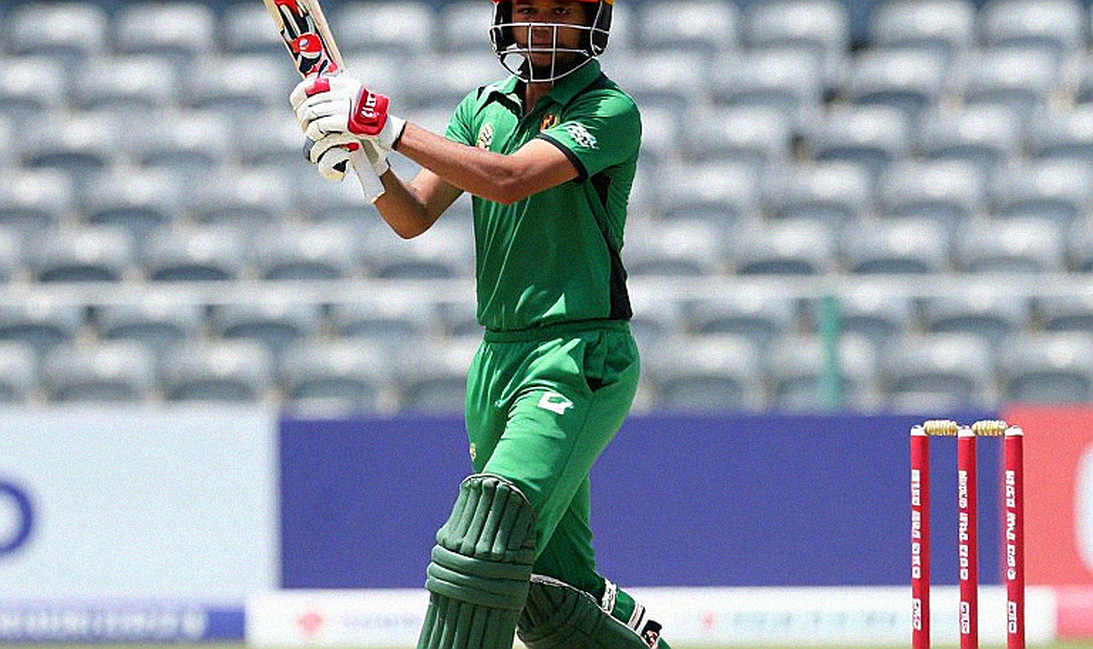
Inglis is 31 and Leeds-born. He now has two Test centuries, both exactly 102. That symmetry is a curiosity, not a technique signature; two innings of identical score tell us nothing about consistency. His Test average, home record and spin-versus-pace splits are all unavailable here, so any claim that he has "arrived" as a Test No. 5 is premature. Verdict: promising, unproven.
"We should have had another 50"
Inglis's own assessment was more useful than the century itself. He said Australia should have added more runs this morning and that a big total was needed. Translated: the last five wickets under-delivered, and the lead is roughly 100 rather than a plausible 150–170.
That 50–70-run gap looks small on paper but carries disproportionate weight in a fourth innings on a surface that dries and takes turn as the match wears. His self-criticism is the most honest technical point in the entire report, because it exposes a weakness the scorecard conceals.
He also called it "a really good wicket" — a comment that cuts both ways. It indicts South Africa's batting, since 140 for 4 in reply to 429 on a good surface is no strong position. It also warns Australia, because if the pitch is still good, six wickets can build a substantial total.
Two wicketkeeper-batters: an advantage and a squeeze
Alex Carey made 80 and Inglis 102 — roughly 180 of Australia's 429 came from two keeper-batters. Structurally that is free batting depth. The hidden cost is that the moment Smith is fit, Australia face a three-into-two problem: Inglis, Carey and Smith all needing a place. Inglis currently carries no keeping workload, so his value is being priced purely on batting.
Smith's injury is a warning, not a footnote
Smith's withdrawal is the least discussed and most serious event of the match. Inglis admitted it "wasn't ideal preparation" — told on arrival at the ground that he was playing, then thrown into a decider. That is procedurally fine, since the change was made before the toss, but competitively it is a real asymmetry. More importantly, neck complaints in a batter past 36 tend to recur, and Australia should not assume Smith's availability for the next assignment. There is an immediate effect too: Smith is the slip cordon's most reliable member, and the fourth innings is when catches decide matches.
South Africa: good starts, poor conversions
Marques Ackerman made 62 and captain Temba Bavuma 35. Both were set, both had stabilised the innings, and both fell in the final session as Australia struck twice. Inglis conceded they were batting well and that Australia "controlled the tempo" — the right word. Controlled, not dominated. Had that partnership lasted another 60–80 runs, the lead would have been near 100 rather than 40 and the whole equation would have changed.
South Africa's problem is not bowling but batting conversion. On home conditions 329 is par or slightly below, and 140 for 4 in reply to 429 on a good pitch is a clear sign the top order is failing to convert.
Newlands and Nathan Lyon
The most forward-looking sentence in the report came from Inglis about Lyon: that he bowled brilliantly and looked threatening the whole time. That comes from an opponent, not a scorecard, which gives it weight. Newlands traditionally bats well early and dries into a turning surface as the match wears. If Lyon is threatening on day three, days four and five favour Australia's attack. His wickets and economy are not disclosed, so the conclusion rests on qualitative observation.
That makes Inglis's second observation more important still: that anything over 200 could be tricky batting last. It is realistic rather than pessimistic. A 200–230 target at Newlands is genuinely competitive, especially with an ageing Australian top order and no Smith.
Clear up the follow-on confusion
Australia's lead was 100; the five-day follow-on threshold is 200. Australia never had the option — they neither declined nor considered it. South Africa batting again was mandatory. The strategic consequence is significant: Australia must bat last, so fourth-innings collapse risk is structurally embedded in their position.
The real fourth-innings equation
South Africa have six wickets and a 40-run lead. If those wickets add 120–150, the target is 160–190. If the lower order adds 180–200, the target becomes 220–240 — and the match turns. Australia's biggest risk is not South Africa's top order but the sixth-wicket partnership. Inglis's 200-run framing is the most honest risk statement in the report, because it comes from a man who has batted on that pitch.
Structural comparison
Australia lead clearly on batting depth — a reserve batter's century in a decider is the hardest available evidence. South Africa's depth looks limited, though no information on their lower order is available here. Australia's bowling is balanced, pace-led with Lyon as a stated threat; South Africa's is home-suited pace, and no single bowler dominated — conceding 429 at home is a collective failure. On age structure the risk is inverted: Australia's core is ageing and Smith's injury is the latest illustration, while South Africa are more balanced but batting-inexperienced.
Where the risks sit
First, Smith's neck — a season-level issue, not a match-level one. Second, the compressed margin; the missing 50 runs cannot be recovered. Third, weather: there is no data on Cape Town's forecast here, and a rain-affected draw is the only outcome that fully neutralises Australia. Fourth, the second new ball, available after 80 overs of South Africa's innings, though the over count is not disclosed.
What to watch
The first partnership of day four is decisive. A stand beyond 60, or a lead past 150, opens the match genuinely. Lyon's day-four figures will test the "spin decides it" model. And Australia's medical bulletin on Smith matters as much as anything on the field.
Limits of the information
The source material does not state the year, the toss result, over counts, a pitch report, weather conditions or any DRS incident. Several conclusions above — particularly on day-four conditions and new-ball timing — are inference, not confirmation. The scorecard-level facts (runs, wickets, quotes) come from a reliable source; the surrounding context is thin.
Conclusion
Australia are ahead but not in command. A 100-run lead with the opposition 40 for 4 is strong, not sealed. The correct framing is "Australia are favourites with meaningful residual risk", not "Australia are closing in on victory". And the most durable insight is not the century but two structural pictures: Australia's bench depth, and South Africa's batting-conversion deficit.